
The vessel’s departure date does not replace the preparation calendar
In a training scenario, the truck arrived before the vessel’s departure, but container receipt was already closed.
In another case, the container is at the terminal, but the shipping instructions were sent after their deadline.
Both situations illustrate why the voyage date alone is insufficient.
Booking may have different deadlines for cargo, shipping instructions, and VGM.
Their names and order should be clarified with the specific carrier and terminal.
The Maersk example also shows the difference between an early reminder in the interface and the final deadline in the booking confirmation.
Let’s discuss booking deadline control in your company
I can help you review booking deadline control, connect documents and confirmations, and identify the participants and next steps.
We can also discuss similar difficulties and related foreign trade tasks in your company.
We will agree on the scope before work begins.
Gather deadlines from the current confirmation
For each restriction, record the date, time, time zone, source, and the action that must be completed.
‘Hand over to the driver’ does not mean ‘the container has been accepted by the terminal’, and ‘send the information’ does not always mean ‘the data has been received’.
Agree with the carrier and terminal on the point of operation completion.
Separately check the gate appointment, transport availability, and document dependencies.
Set an internal deadline with a buffer that the company has chosen for its operations; there is no universal number of hours for all routes.
Each event must have an owner and confirmation to be passed to the coordinator.
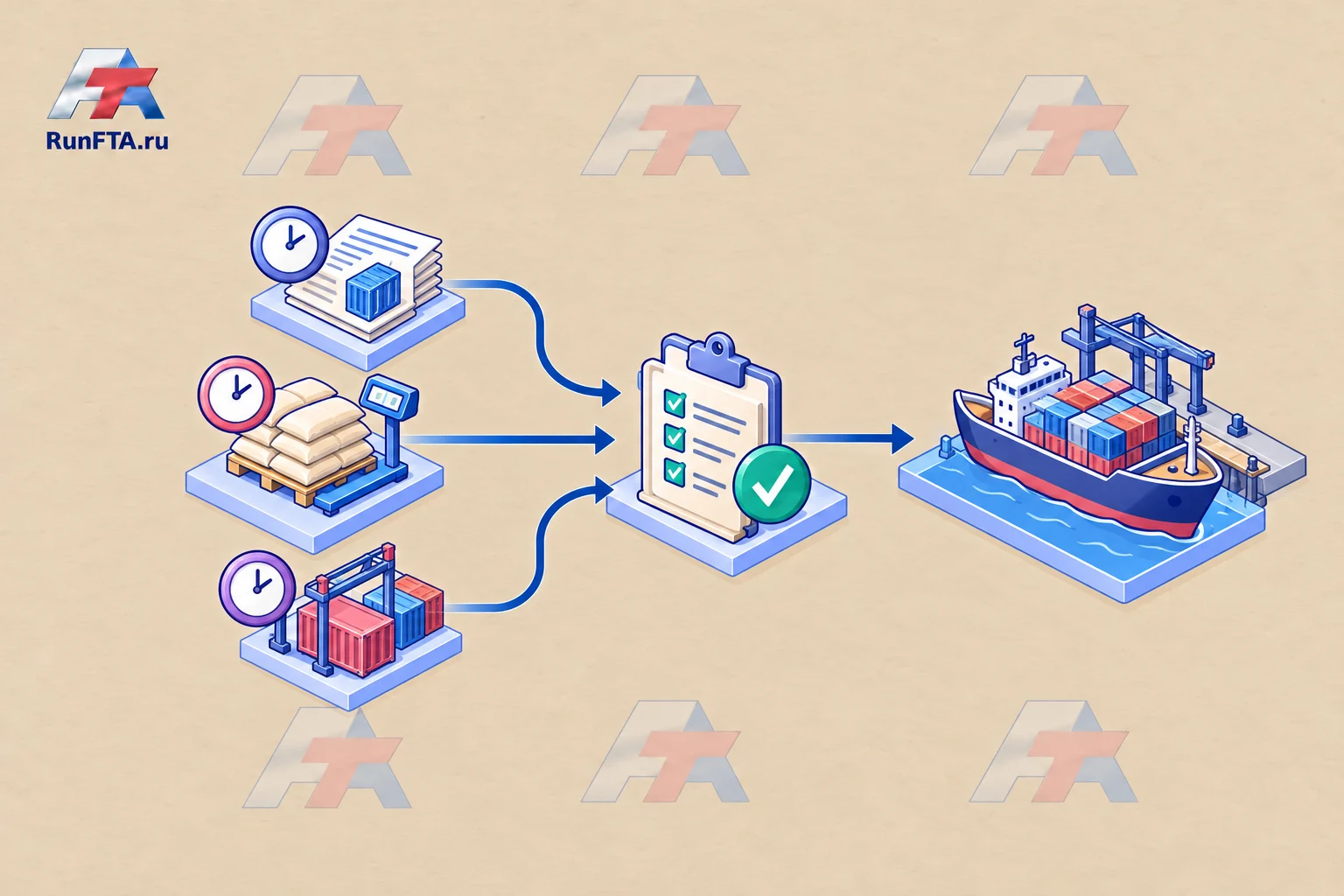
Calendar of three independent flows
The training form does not set carrier deadlines.
| Flow | External restriction | Internal confirmation |
|---|---|---|
| Documents | Shipping instructions deadline | Status of information receipt |
| Weight | VGM submission deadline | VGM transmission confirmation |
| Cargo | Terminal cut-off | Actual receipt event |
| Entry | Entry conditions and time | Confirmed record and transport |
| Voyage | Current booking version | Change verification |
Keep the original time zone alongside the time.
If displaying Moscow time, retain the original value to allow verification of the conversion.
A voyage change triggers rechecking
A new confirmation may change not only the departure date but also the terminal, document deadlines, or cargo receipt deadlines.
The coordinator compares versions and informs each owner which event is affected.
The old gate appointment is not automatically considered valid.
Cancellation, rescheduling, and additional charges terms are verified in the contract and tariffs of the specific carrier.
Do not transfer deadlines or penalties from someone else’s instructions to your booking.
When there is a risk of delay, request options before the external deadline arrives.

Show the nearest deadline to the manager
The summary should only include: which event is coming up first, what is still not ready, who is responsible, and by when a decision is required.
Separately note confirmed carrier changes and internal team delays.
For container costs, use demurrage and detention control.
The cut-off calendar helps prepare the shipment but does not guarantee space on the vessel or override other shipping conditions.
A practical management guide.
Examples are illustrative.
Check requirements and contractual terms for the specific product, country and shipment.
Internal forms do not replace official procedures.
Sources checked on 25 October 2026.