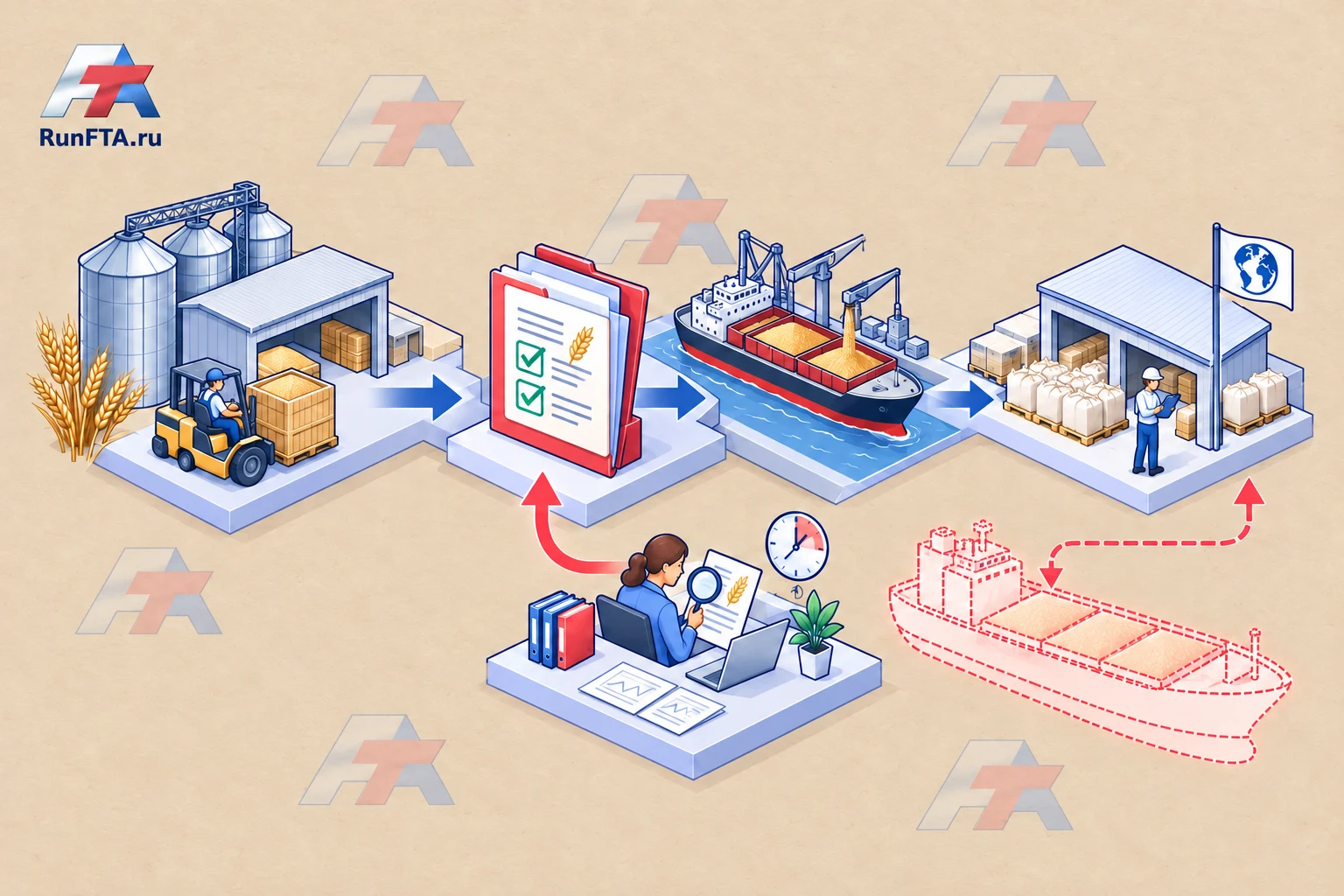

Different Layout Versions Create the Risk of Packaging Rework
The manufacturer updated the composition, the translator worked with the previous file, and the printing house received yet another version.
While the participants discuss the text in different email chains, it is difficult to establish which layout has been agreed upon.
This material pertains to the management of the labeling layout for packaged food products for China.
It cannot be automatically applied to bulk grain, feed, or other product categories.
The requirements for a specific product and the current version of the standards must be checked separately.
Let’s discuss the preparation and approval of documents in your company
I’ll help you sort out your situation: the translator and the manufacturer work on different versions of the label, while the importer sees the layout after printing.
We’ll discuss how to solve this and related foreign trade tasks in your company, the distribution of responsibilities, and the next steps.
The scope of support will be agreed upon before starting the work.
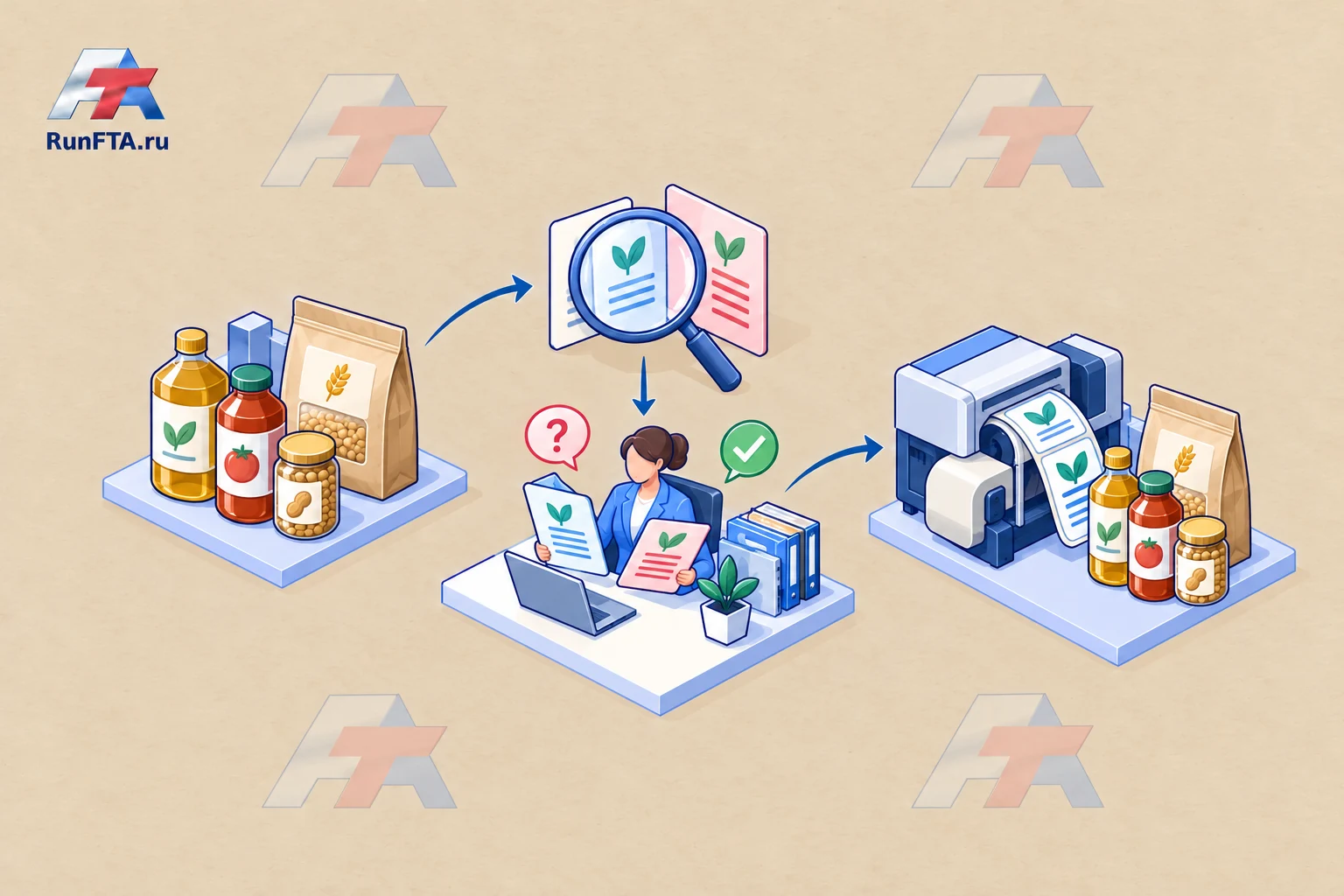
Separate Content, Translation, and Requirement Verification
The manufacturer confirms the actual characteristics of the product.
The translator conveys the meaning of the source text and notes ambiguities.
The importer and a relevant specialist verify the applicable Chinese requirements.
The coordinator manages the versions and the transfer of the approved file.
Official GACC Communication No. 70 of 2019 describes the importer’s role in verifying the compliance of imported packaged food products’ labeling with Chinese requirements.
It does not replace product standards and is not a translation dictionary.
Before printing, agree on the complete layout, not just a separate fragment in a messenger.
Specify the product, language, version number, and a list of open comments.
Layout Approval Register
The training example shows the movement of one version, not the mandatory composition of the label.
| Control | What to Store | Training Entry |
|---|---|---|
| Source Information | Confirmed Specification | Product A, Revision B |
| Translation | File and Translator’s Questions | Translation Is Linked to B |
| Requirement Verification | Conclusion and Open Questions | Question on Composition Designation |
| Approval | Who Agreed on the Complete Layout | Version C, Participant Approval |
| Printing | Which File Was Sent to the Printing House | Version C Only |
Any revision after approval creates a new version.
Send it to the affected participants and obtain re-confirmation in the relevant part.
Do not save multiple files with the same name ‘final’.
The media file and the source file must also have a clear link.
When a Translator Cannot Resolve a Comment Alone
If the product category or the applicability of a requirement is unclear, a specialized review is needed, not a more flexible translation.
If there is a contradiction between the specification and the layout, first clarify the actual information with the manufacturer.
Do not carry forward the approval of another package, product, or previous layout version to a new shipment.
Do not assume that Russian and Chinese inscriptions are equally mandatory without verifying specific regulations.
Internal approval does not guarantee the outcome of state control.
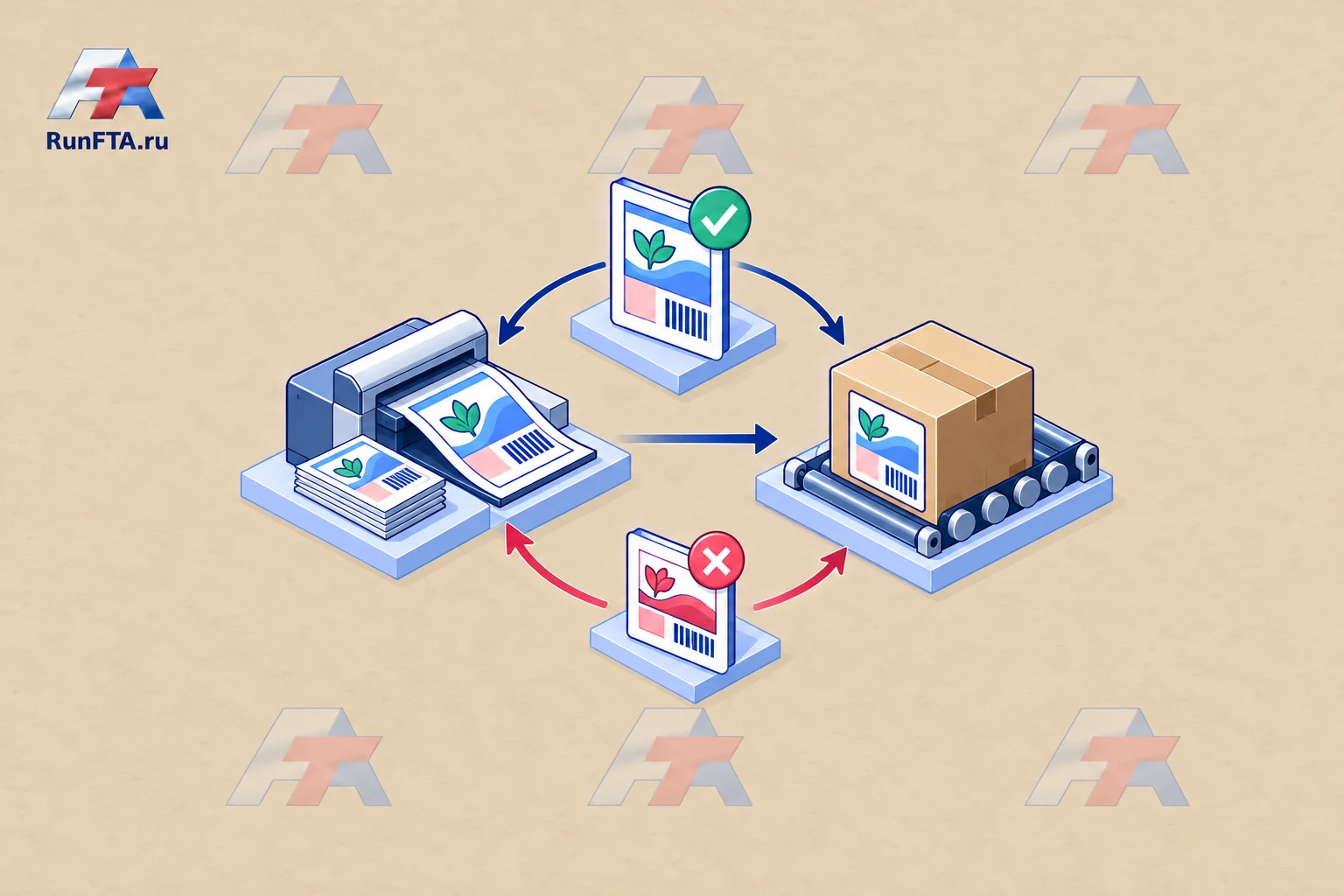
Verify the File That Will Actually Go to Print
Cross-check the approved layout with the production file and the trial packaging sample.
Record who verified the file consistency and where the approval is stored.
If the sample differs, return it for approval before mass production.
Link this stage with verifying the readiness of the export shipment.
This way, changes to the product or packaging will be visible alongside other delivery terms, rather than remaining within the designer’s correspondence.
A practical management guide.
All examples are illustrative.
Check applicable requirements and terms for the specific product, country and contract.
Sources checked on 24 October 2026.