A parameter name is not a complete specification
“Moisture meets the buyer's requirements” leaves too much unresolved. Different results after arrival may reflect the cargo's condition, sampling, analytical methods or examination of different portions. The specification should help distinguish these explanations before a claim arises.
Start with intended use: food, feed or processing. Market-access and safety requirements are product- and destination-specific; commercial parameters are negotiated. A contractual discount does not cure a failure to meet mandatory requirements. Do not transfer soybean limits to peas or one country's rules to another.
Let’s discuss agreeing a grain quality specification
I can help review your situation, identify documentation and coordination tasks, and agree participants and next steps. We can also discuss related trade issues and similar difficulties across your company’s shipments. Tell me where the process is getting stuck so we can agree a specific task and scope of support.
Discuss your taskMake the agreed conditions comparable
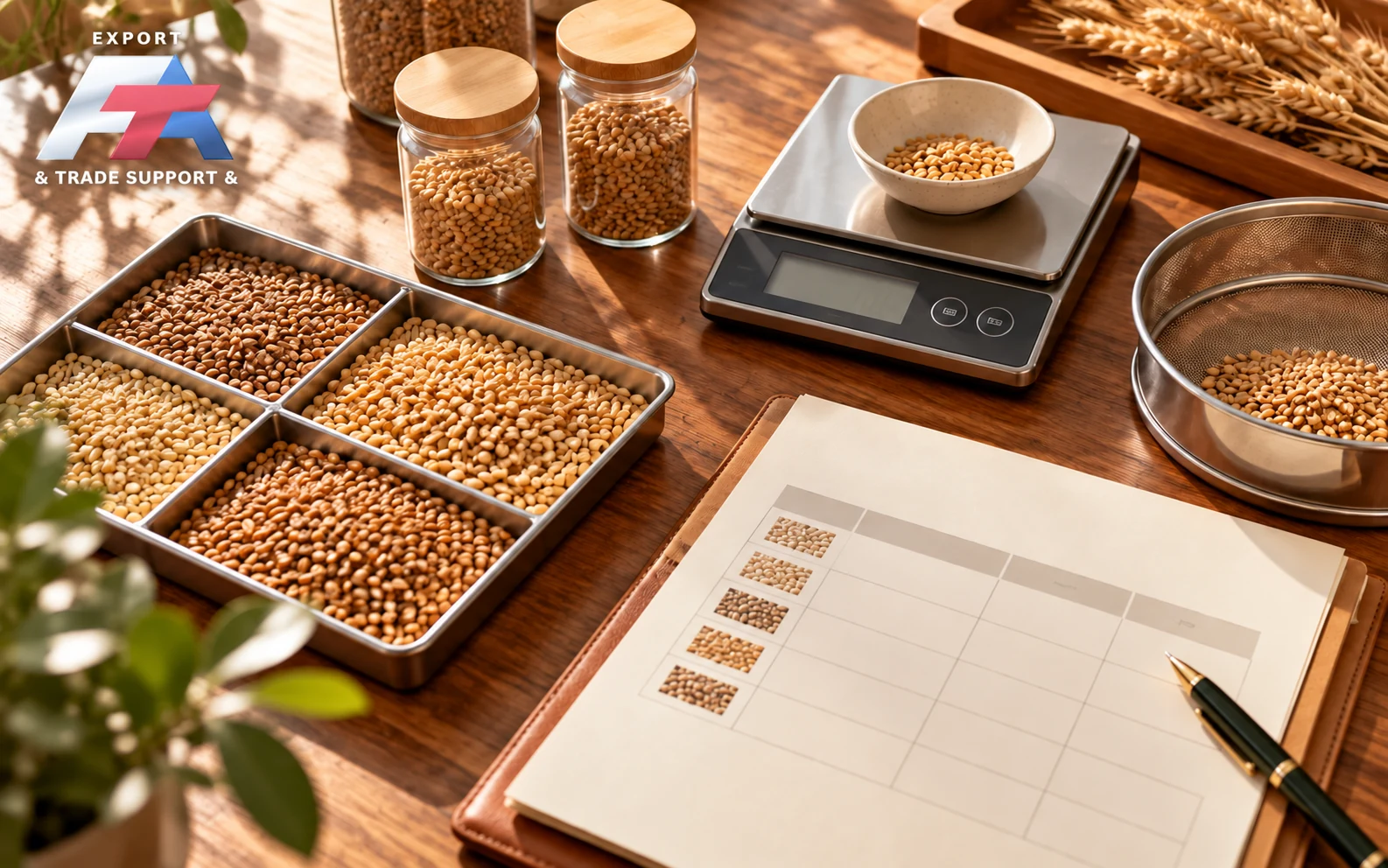
For each parameter record the limit, unit, method and inspection point. A technologist and market-requirements specialists should define the actual list. It may include moisture, impurities, damaged grains and processing characteristics. No universal numerical limits are proposed here.
| Field | Agreement needed |
|---|---|
| Identification | Product, use, lot, weight and packaging |
| Parameter | Unit, threshold and basis of the requirement |
| Test | Method, laboratory, report format and language |
| Sample | Location, time, sampler, labelling and retention |
| Acceptance | Who compares results and resolves a discrepancy |
Analysis and sampling are within the scope of Codex Alimentarius. That does not make every Codex recommendation a substitute for Chinese import rules. Check the relevant document, product and current edition.

Connect the sample to the shipment
Agree how each sample is linked to the lot and transport unit. If lots are mixed, establish what the combined sample represents. Record where retained samples are held, who can access them and how their identification is preserved.
Arrange the other party's representative where necessary and feasible. An email agreement does not by itself secure access to a terminal or laboratory. Confirm arrangements with service providers and account for site, safety and official-control restrictions.
Test the two-results scenario
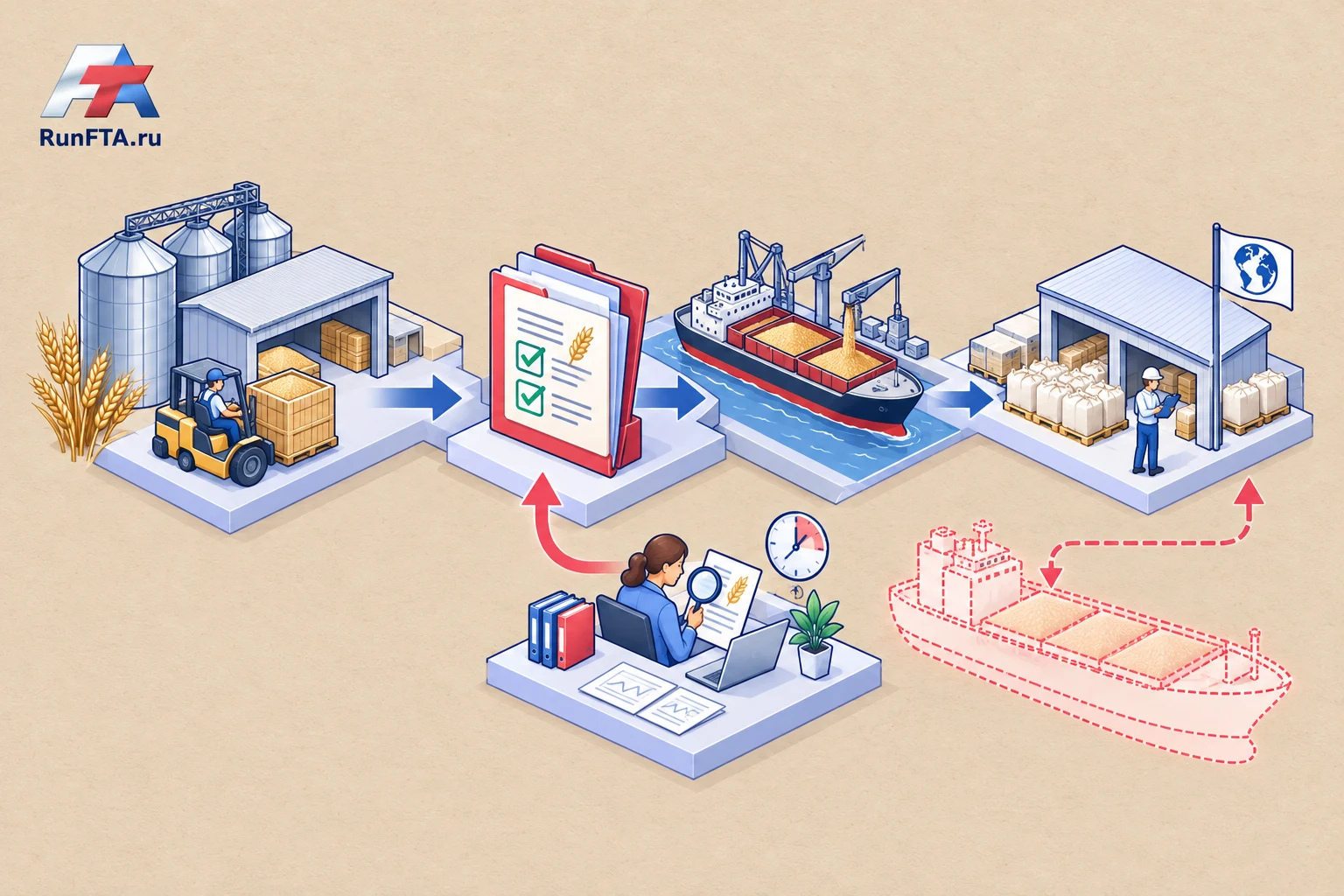
Suppose loading and buyer-warehouse analyses disagree. Before discussing a discount, compare units, methods, identification and sampling conditions. Then reconstruct transport and storage. Do not replace one report with another without explaining the difference.
Agree beforehand who coordinates comparison, which retained samples are available and how both parties receive the same evidence. This is a suggested workflow; the technical procedure belongs with qualified specialists.

Give management a usable decision pack
Before release, provide the final specification, sampling and acceptance procedure, unresolved points and named owners. An unanswered question should not become “agreed” simply to preserve the timetable.
If a defect is reported, use the quality-claim workflow. Treat producer and product access separately through the China readiness review. Run FTA can coordinate the document package; specialist providers perform testing and issue their conclusions.
Management guidance for exporters. Numerical examples are illustrative; requirements and terms must be checked for the specific product and transaction. Sources checked on 24 October 2026.