An intact seal doesn’t explain the whole container history
The documents show one seal number, but a different one is visible upon arrival.
This may be due to authorised opening, a recording error, or an event yet to be established.
The discrepancy itself requires explanation but does not allow you to immediately blame a transportation participant.
You need a continuous record: which container was transferred, with which seal, to whom, and on what basis it was replaced.
The seal helps control access but does not prove the quality, weight, or safety of the food cargo.
Let’s discuss seal records and container handover in your company
I can help you review seal records and container handover, connect documents and confirmations, and identify the participants and next steps.
We can also discuss similar difficulties and related foreign trade tasks in your company.
We will agree on the scope before work begins.
Record the container and seal as a single unit
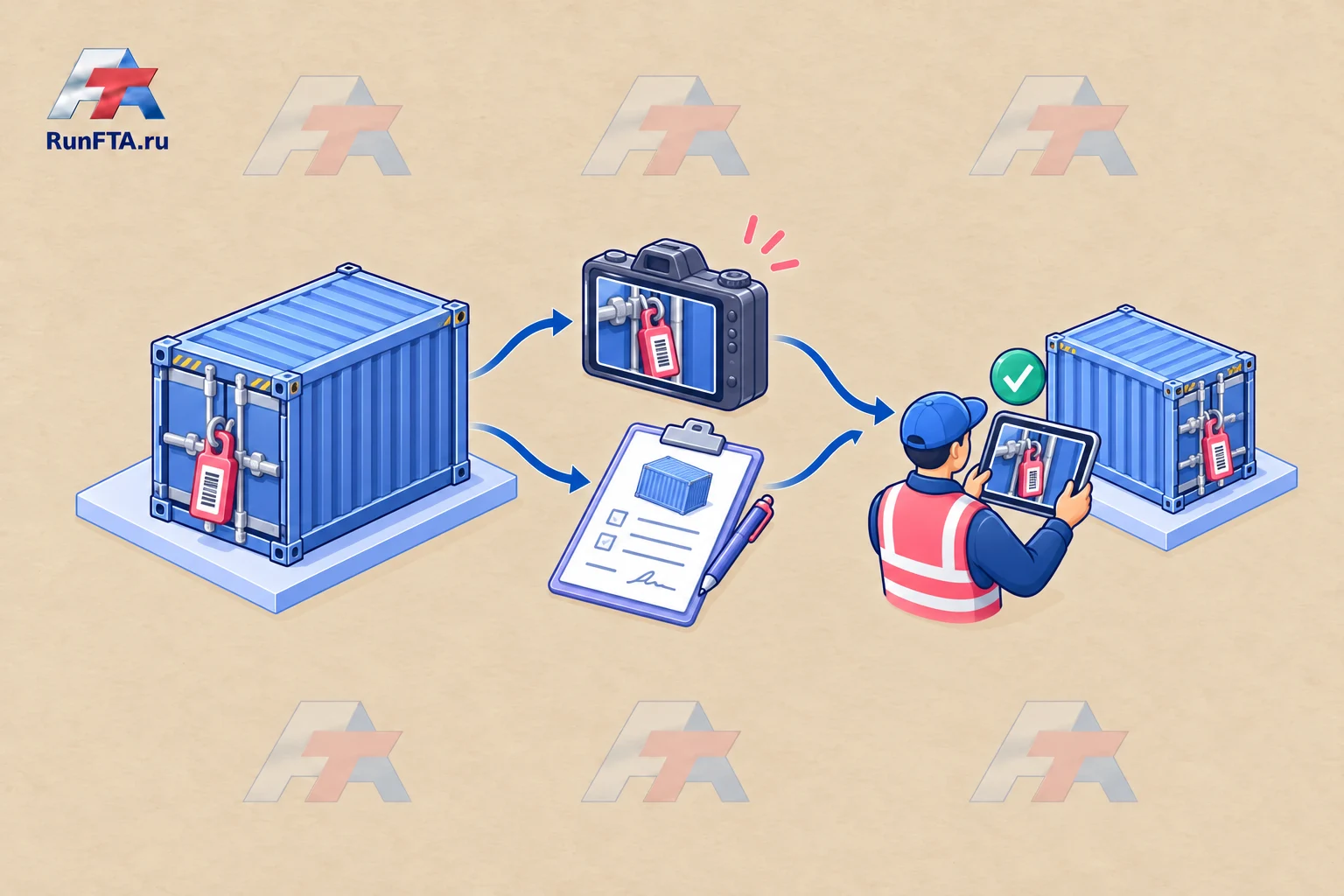
After container packing is complete, the assigned participant records the container ID, the installed seal number, the installation location, and the time.
The photo should allow you to match the record to a specific object, not just show a close-up of the number without context.
The information is shared with the shipper and participants according to the agreed procedure.
During the next transfer, the actual seal is compared with the documents and its condition is recorded.
The seal type, application procedure, and specific route requirements are specified separately.
This article is not an installation or opening instruction.
Event log instead of a single field
A training structure preserves the history even if a field in the current document had to be updated.
| Event | What to record | What to attach |
|---|---|---|
| Initial installation | Container, number, date, participant | Photo and container packing record |
| Transfer | To whom it was transferred and the reconciliation result | Transfer document |
| Authorised opening | Basis and authorised participant | Act or other confirmation |
| Replacement | Old and new numbers | Link to the replacement basis |
| Acceptance | Actual condition and discrepancies | Photo and receiver’s record |
Do not erase the old number after replacement: without it, the next participant will find it difficult to explain the difference from the previously issued document.
Stop guessing when there’s a discrepancy
Save photos and current documents, notify the responsible person, and request confirmation of the last event.
If the seal was replaced by an authorised participant during inspection, link their record to the new number.
Do not amend the original act as if the new seal was originally in place.
If the basis is not found, record the uncertainty and follow applicable security, acceptance, and notification procedures.
Claim deadlines and action procedures are determined by the contract and route requirements, not this internal table.
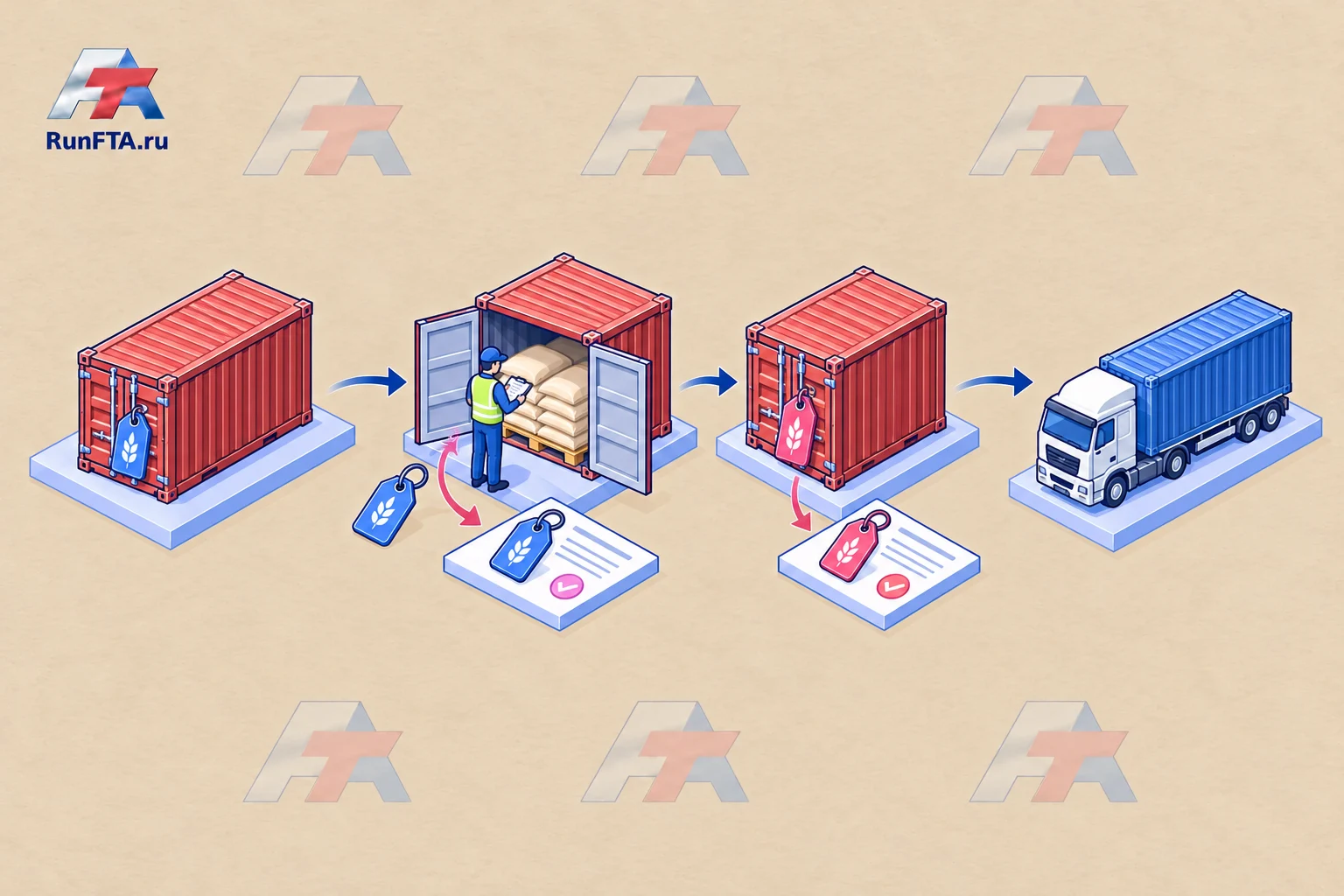
Conduct a check on a single shipment
Ask an employee to reconstruct the container’s history from container packing to the recipient using only saved records.
If you had to ask verbally where the new number came from, add the missing confirmation to the process.
Link the log to the export shipment register.
Store cargo condition and quality control data separately.
Then the seal number will remain a useful part of the transfer chain, not a universal ‘everything is fine’ mark.
A practical management guide.
Examples are illustrative.
Check requirements and contractual terms for the specific product, country and shipment.
Internal forms do not replace official procedures.
Sources checked on 25 October 2026.