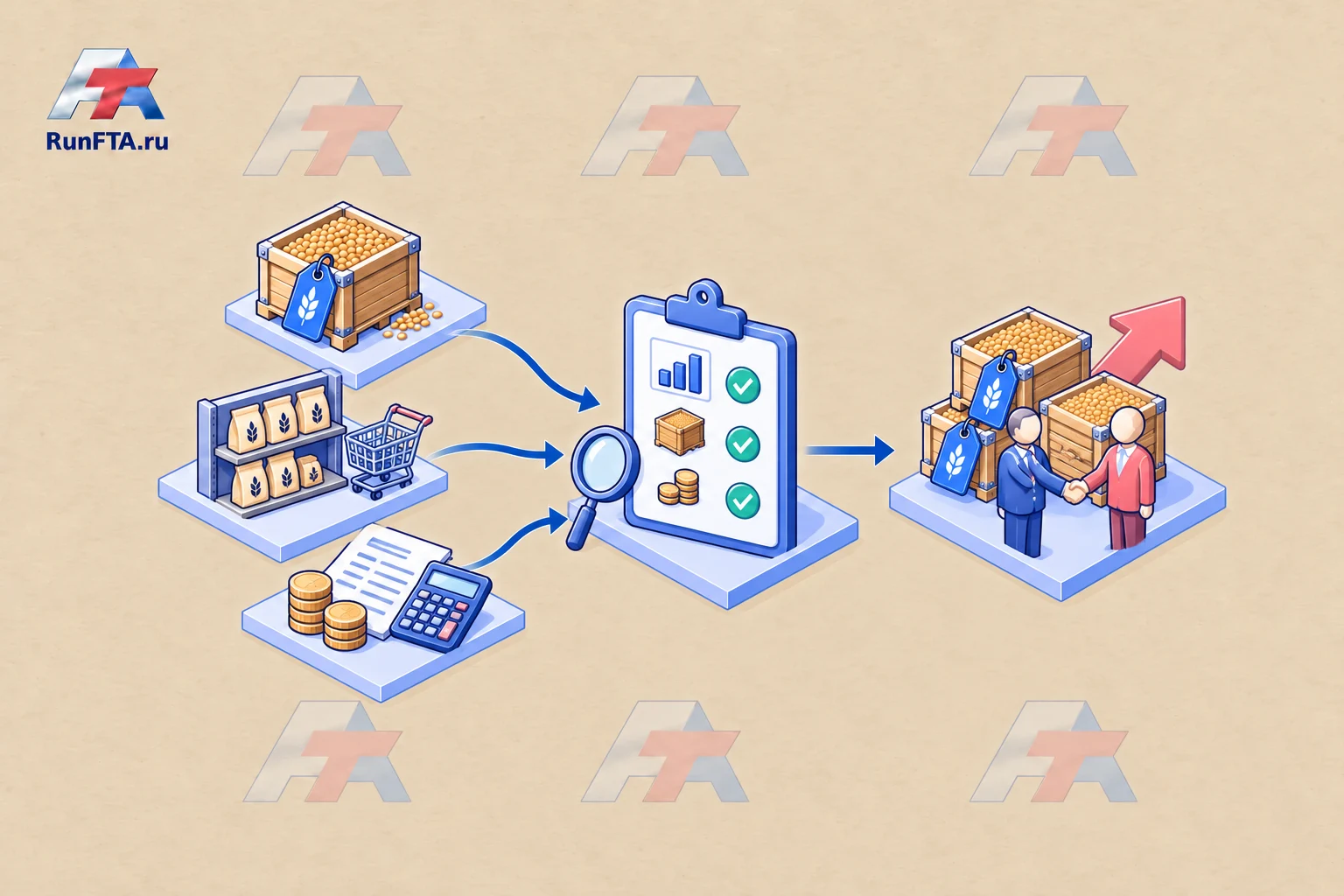
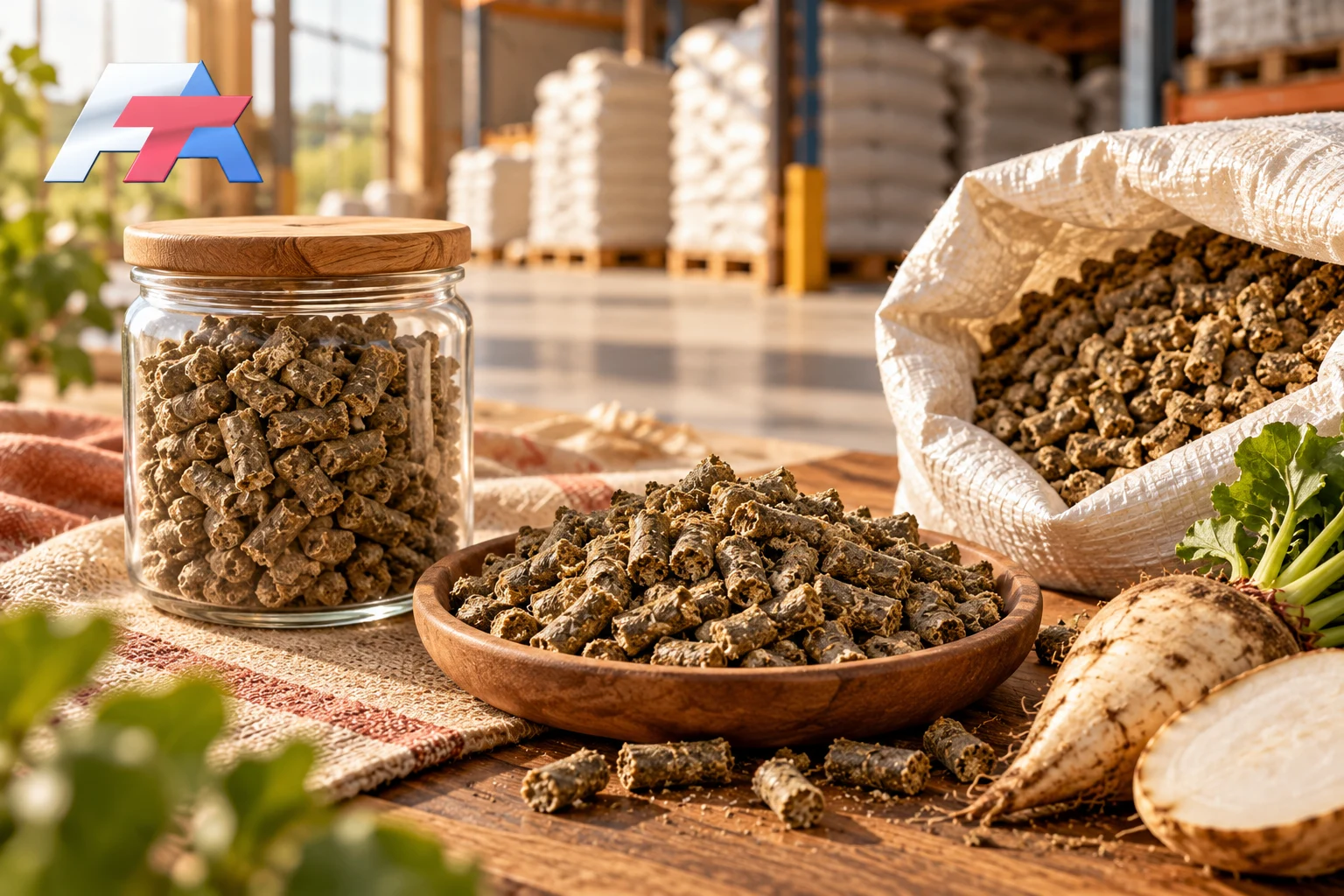
Agree not only on the composition but also on the physical form
In a training scenario, the recipient expected granulated pulp that suited their receiving system, while the discussion was limited to the price per tonne.
Upon arrival, questions arose about the proportion of fines and unloading.
The cause of the dispute is not necessarily a product mismatch: the parties might have understood the parameters differently.
For a feed product, safety, purpose and applicable requirements are checked separately.
The Code of Practice on Good Animal Feeding addresses the handling of feeds and their ingredients; it does not replace the buyer’s specification for a specific beet pulp.
Let’s discuss the parameters of the beet pulp batch and acceptance in your company
I’ll help you analyse the parameters of the beet pulp batch and acceptance, collect initial data and confirmations, identify participants and next steps.
We’ll also discuss similar challenges and related foreign trade tasks in your company.
The scope of support will be agreed before starting the work.
Request parameters affecting acceptance
The manufacturer describes the product, additives (if any), processing method and the actual form of supply.
The buyer confirms the equipment and properties that are essential for them.
The granule size, fines, moisture content and other agreed characteristics must not be replaced with the word ‘standard’.
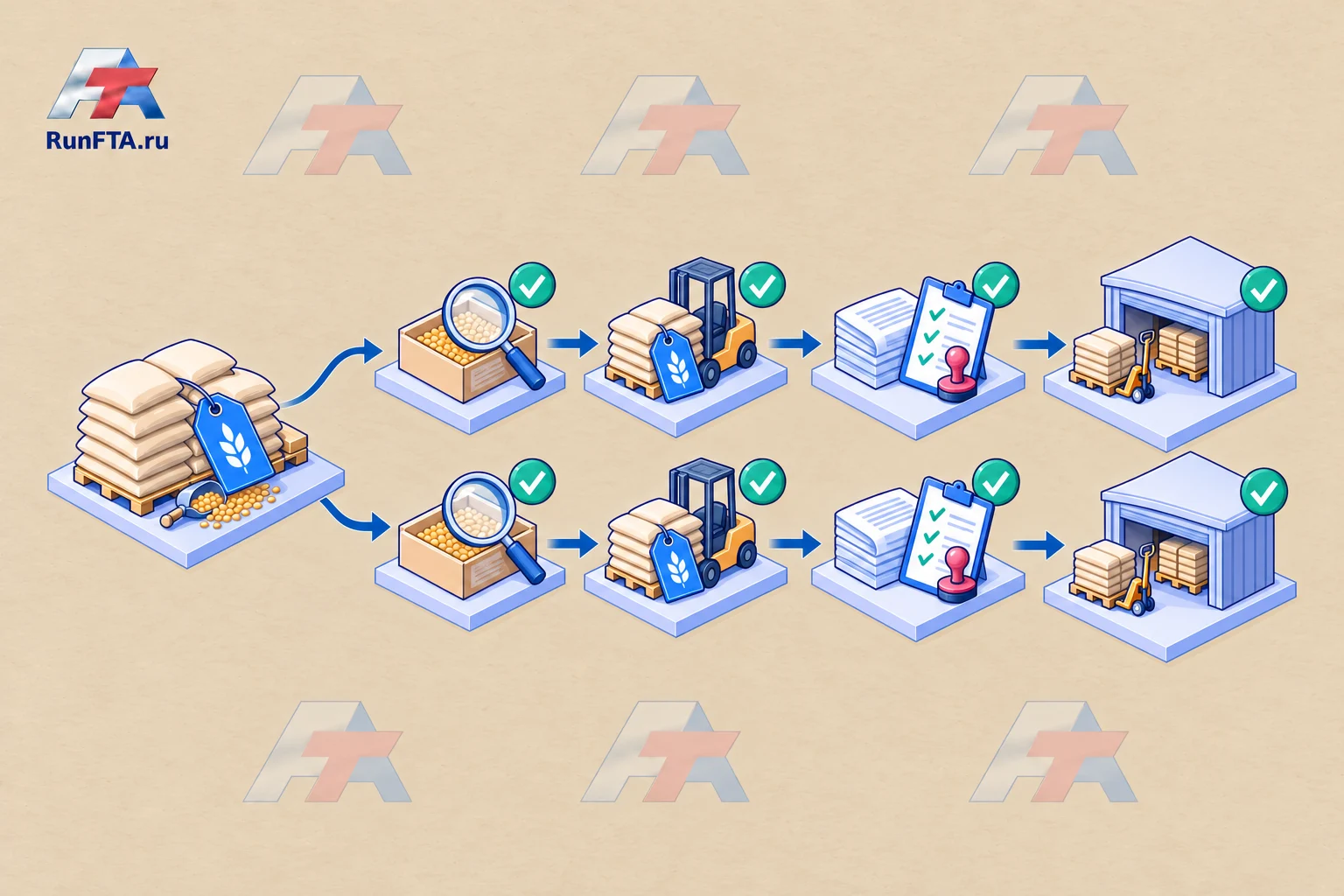
For each indicator, record the method and timing of assessment.
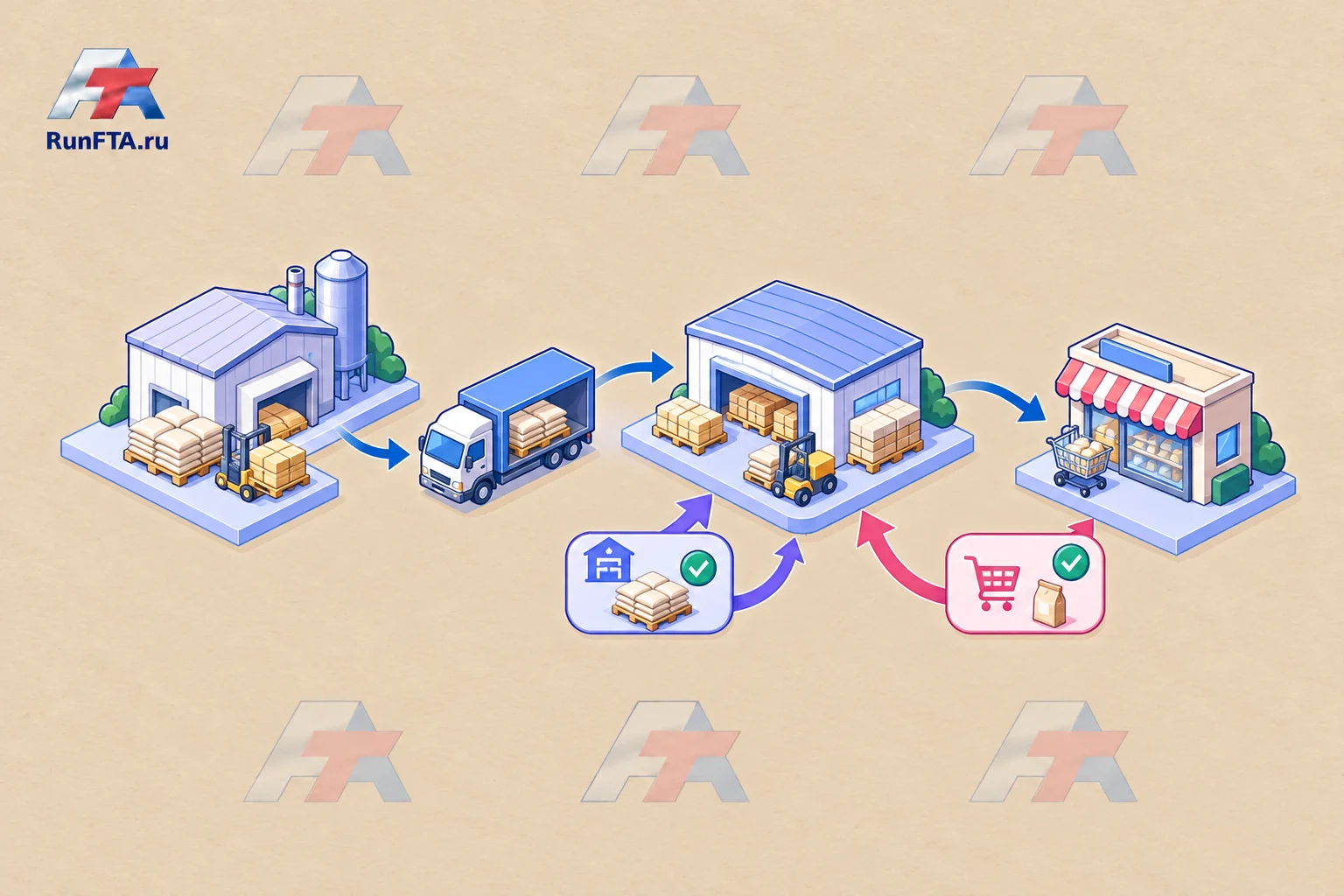
The condition at shipment and after several transshipments are different observation points.
Storage and transportation requirements are determined by relevant participants; this article does not set a universal regime and does not guarantee granule preservation on any route.
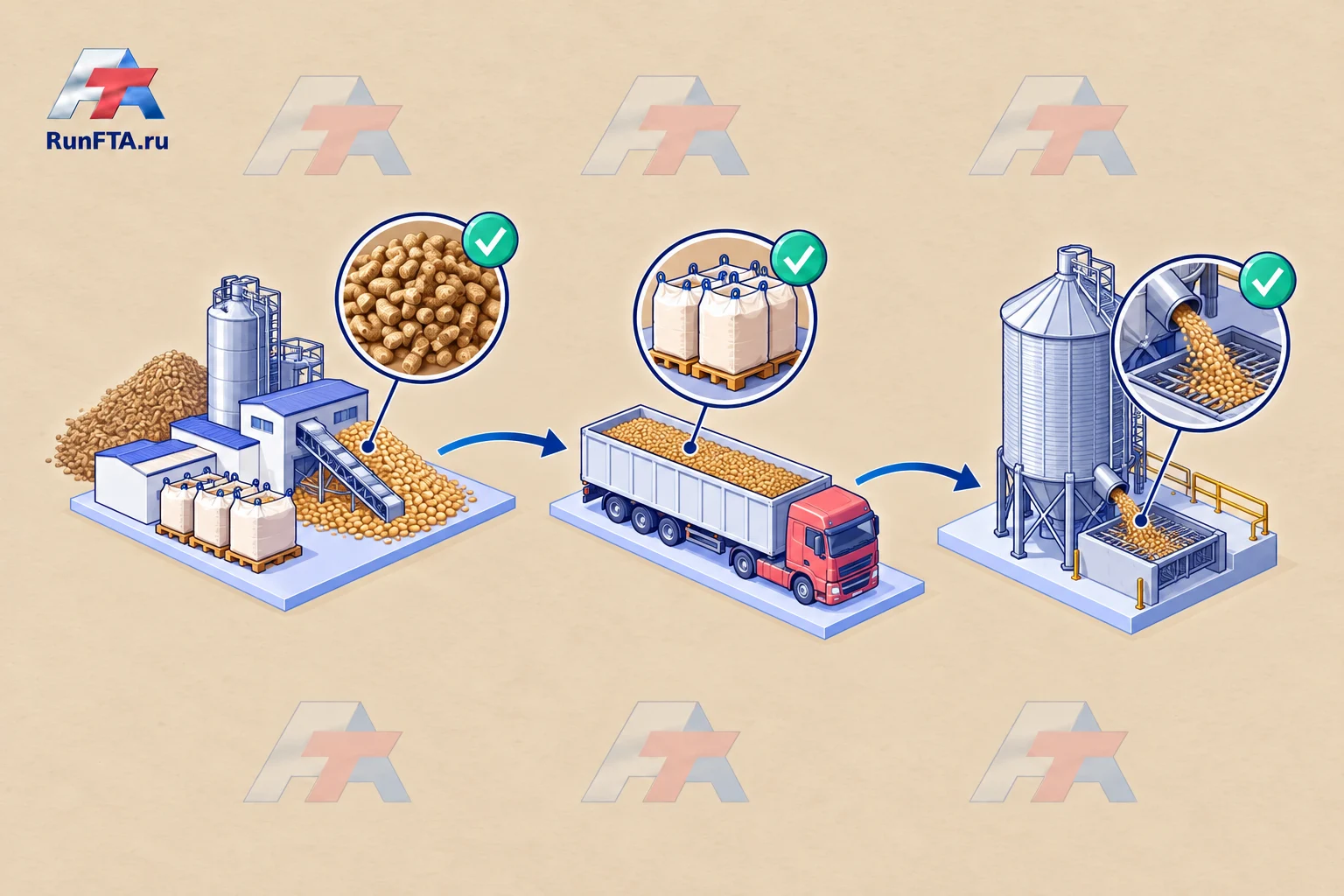
Batch and unloading card
A training structure helps link a commercial condition to an actual action.
| Block | What to agree on |
|---|---|
| Product | Origin, composition and purpose |
| Physical properties | Indicators, method and timing of inspection |
| Packaging | Type, configuration and restrictions |
| Route | Transshipments and handling of the batch |
| Unloading | Equipment and responsible site |
Keep the recipient’s confirmation, not just the intermediary’s response that ‘the warehouse can handle it’.
When changing the site, recheck this block.
Separate product properties from handling consequences
If more fines are found during acceptance, preserve information about sampling, packaging condition and transportation events.
A single photo does not show when the change occurred.
Technical conclusions and liability allocation require separate grounds.
For feed purposes, do not transfer food grain documents and indicators to beet pulp just because both cargoes are agricultural products.
A competent participant checks the requirements specific to that product and destination.
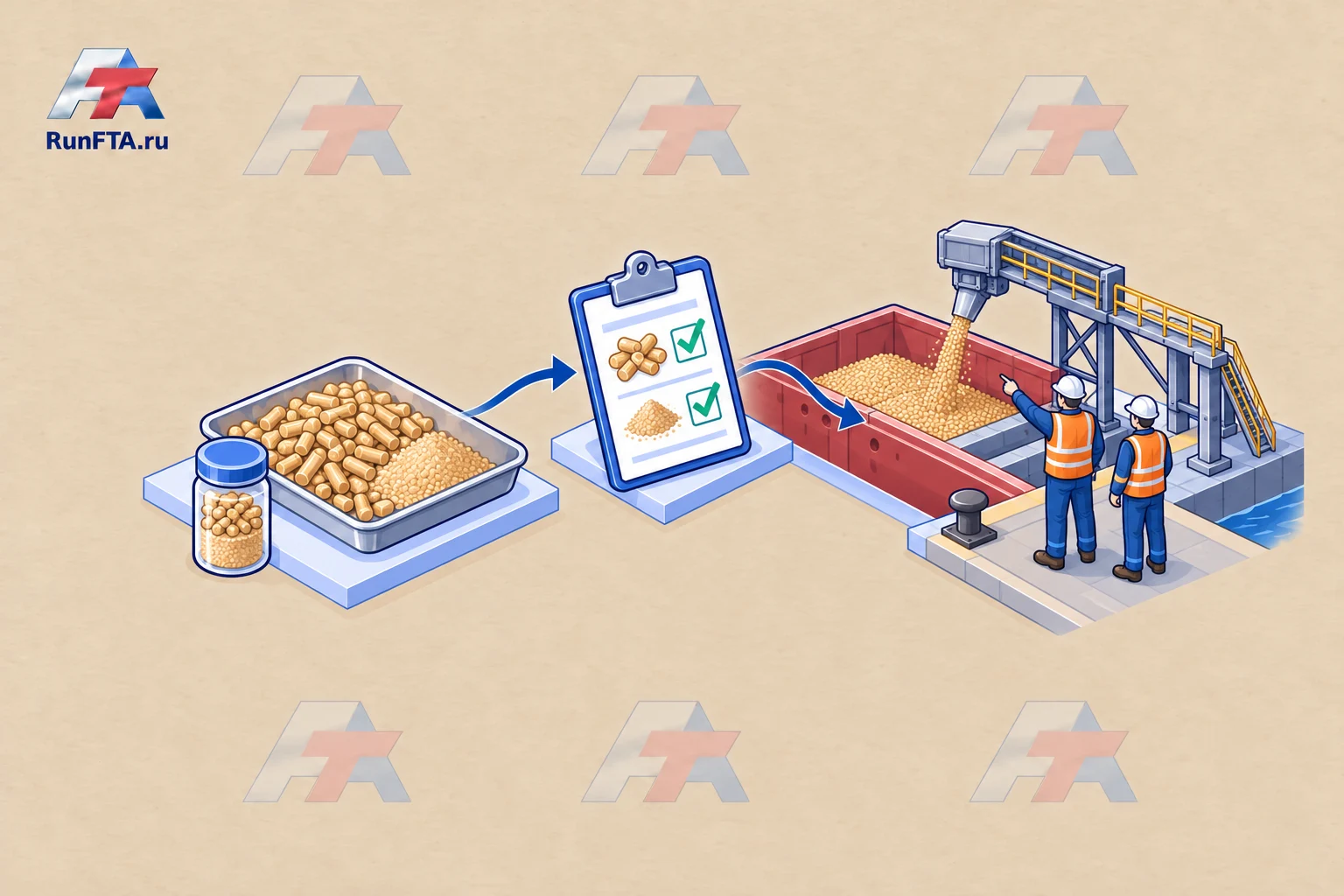
Start by reconciling one actual configuration
Before the next deal, bring the manufacturer, operator and recipient together around one card.
Resolve which parameters actually affect acceptance and who confirms them.
Do not expand the list with unsystematic analyses without a clear purpose.
Include the set in the shipment document register.
For the manager, the result will be an agreed ‘property — confirmation — operation’ link, not just a lengthy product description.
A practical management guide.
Examples are illustrative.
Check requirements and contractual terms for the specific product, country and shipment.
Internal forms do not replace official procedures.
Sources checked on 25 October 2026.