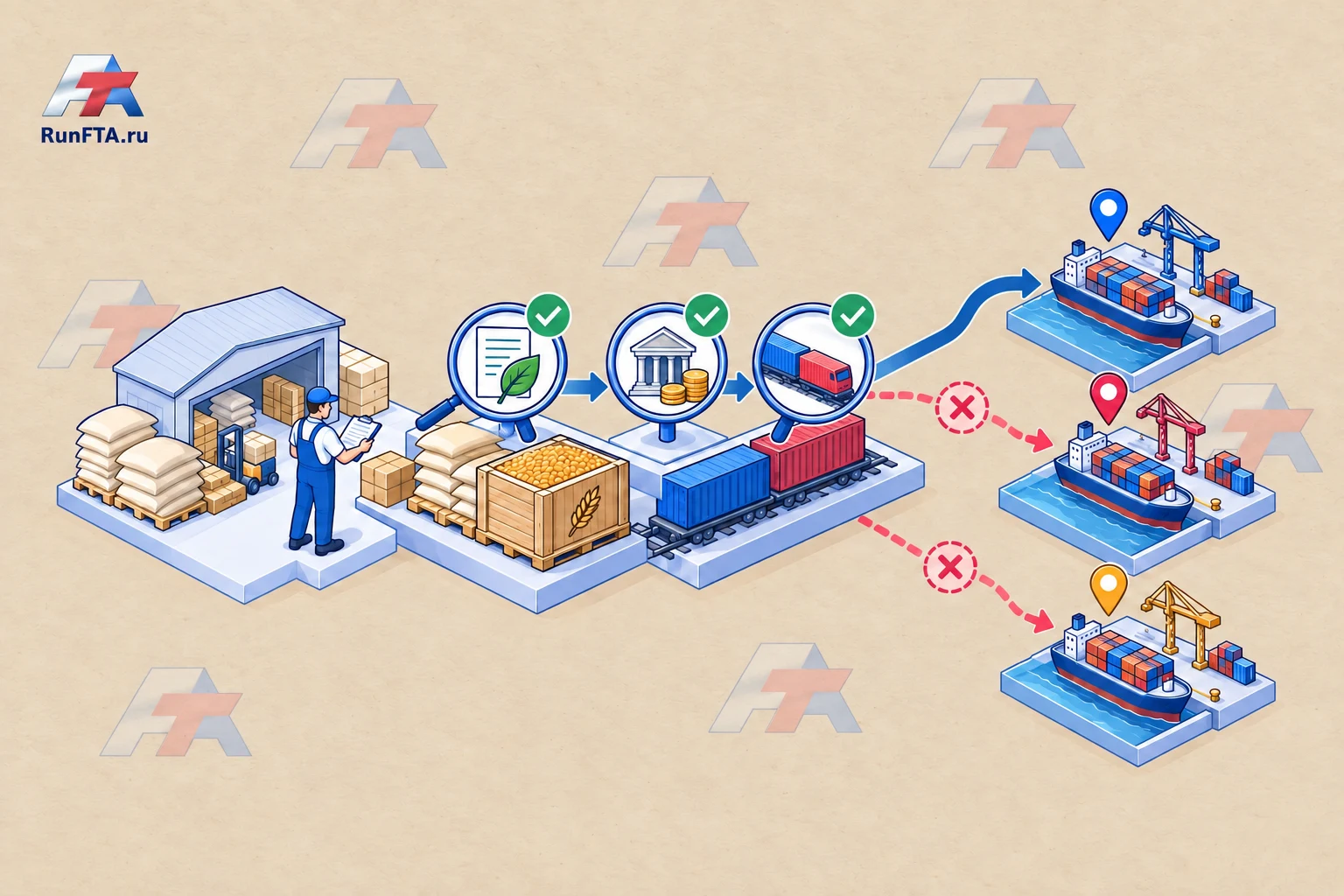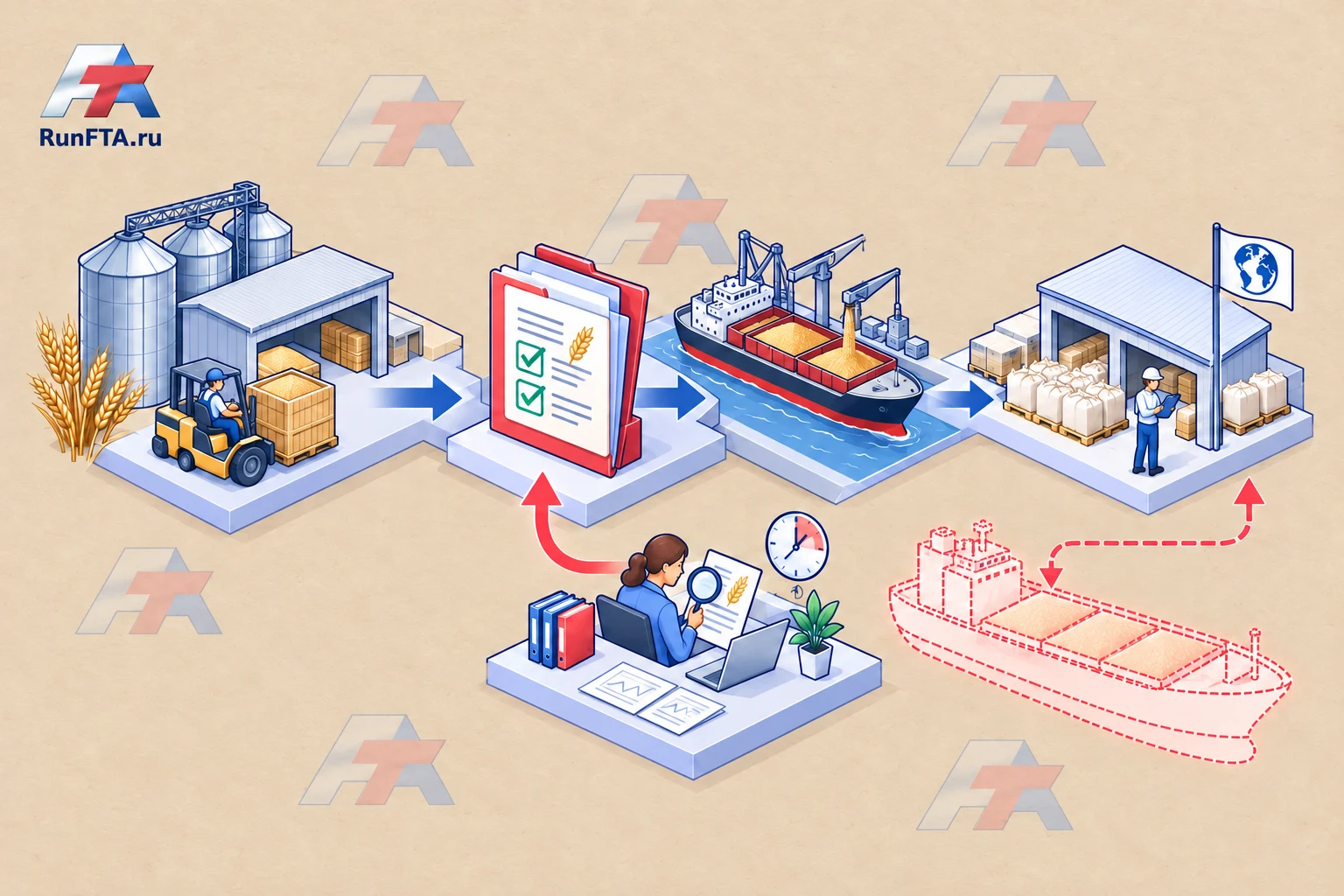

“Wagon sent” is only one event
After receiving the shipment notification, the manager still needs to know what has been confirmed along the route, when to expect the next information, and who will investigate any deviations.
A single overall status hides these questions.
Below is an internal event log for a rail grain shipment.
It does not replace transport documents, carrier data, or the agreed-upon interaction procedure.
The composition of events depends on the actual route, transshipments, and participants.
Let’s discuss export transportation coordination in your company
I’ll help you analyse your situation: the ‘wagon sent’ report replaces the monitoring of the next event and response timeframe.
We’ll discuss solutions to this and related foreign trade tasks in your company, the distribution of responsibilities, and next steps.
The scope of support will be agreed upon before work begins.
Separate the plan, fact, and assumption
Agree on key events with the carrier or freight forwarder: acceptance for carriage, departure, agreed intermediate points, terminal operations, arrival, and delivery.
Do not use this list as mandatory for any shipment.
Each event should have a planned reference, actual confirmation, source, and next control point.
The message “expected tomorrow” refers to a forecast, not the actual arrival.
If sources conflict, retain both messages with the time of receipt and request clarification.
Link the wagon number to the batch: when changing the transport unit, the link must not be lost.
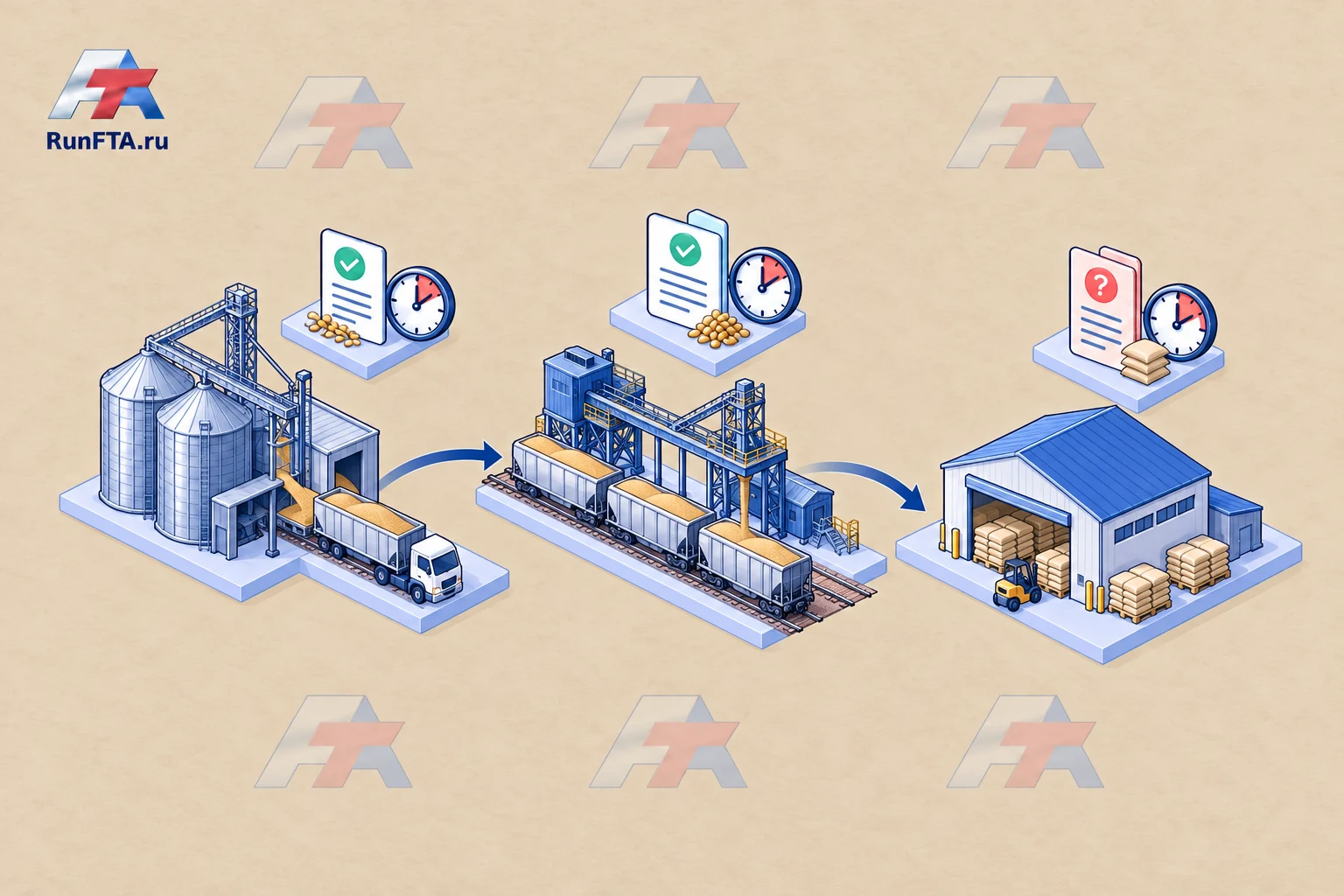
Event log for one batch
All notations are for illustration; deadlines are substituted from the actual plan.
| Record | What to store | Next action |
|---|---|---|
| Batch P, wagon A | Linking the goods and transport unit | Check the transport document |
| Departure | Confirmation and time of the event | Request the next control point |
| Expected arrival | Forecast and its source | Do not mark as a fact |
| Deviation | What is known and what is being clarified | Assign an owner for the issue |
| Delivery | Confirmation of the agreed event | Close open issues |
The working record should answer the manager’s question without needing to search for the email author: what happened, where the information comes from, and what to check next.
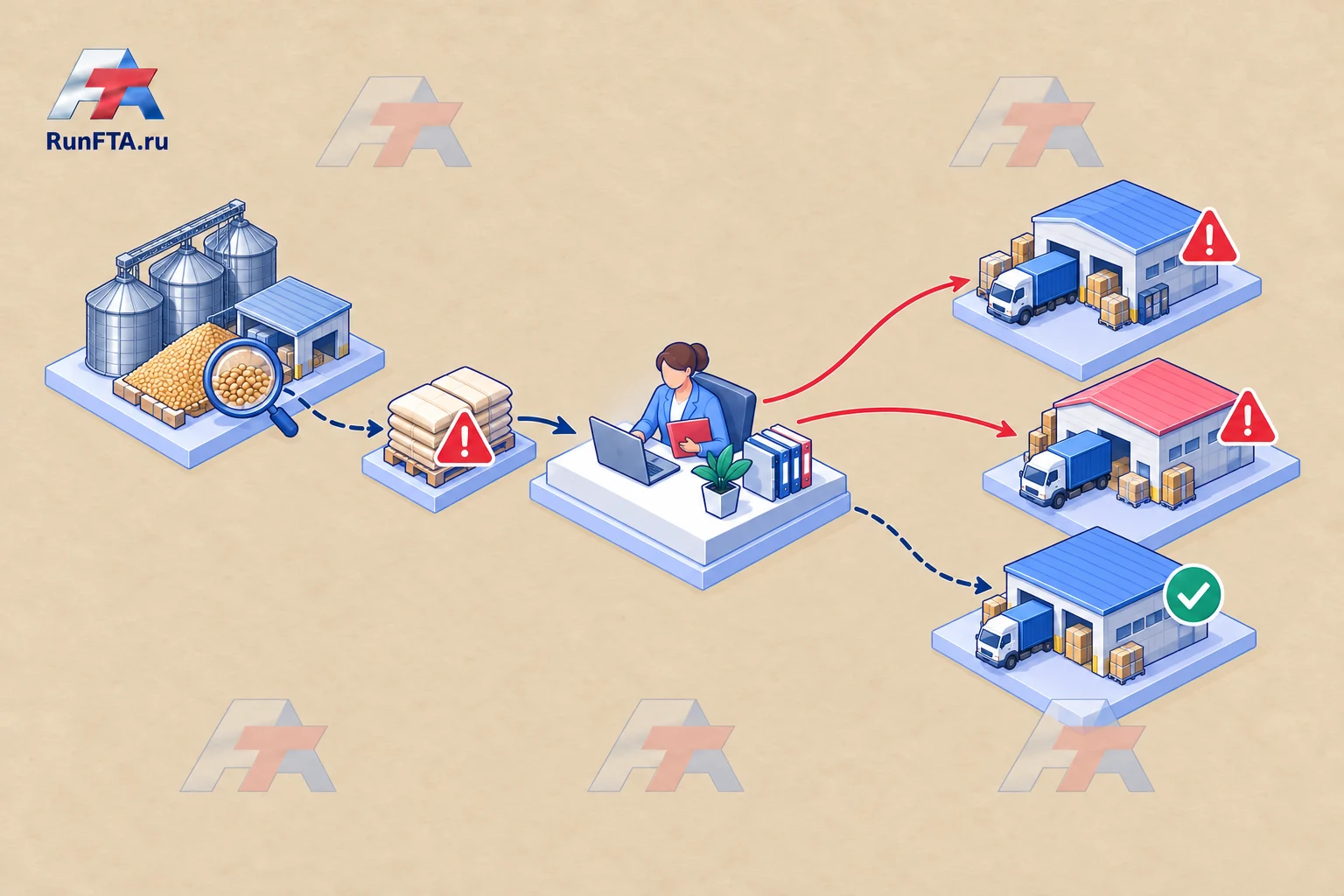
When there’s a delay, first clarify the boundary of what is known
The absence of a new message does not prove the wagon is delayed.
First, check the time of the last confirmation, the data receipt channel, and the availability of the next observable event.
Then, clarify the reason with the party that has the relevant information.
Rail documents vary depending on the route and transportation conditions.
CIT materials on CIM/SMGS are useful for a specialized analysis but do not mean that one form is mandatory on every Russian-Chinese route.
Do not promise a buyer a deadline based on an unconfirmed forecast.
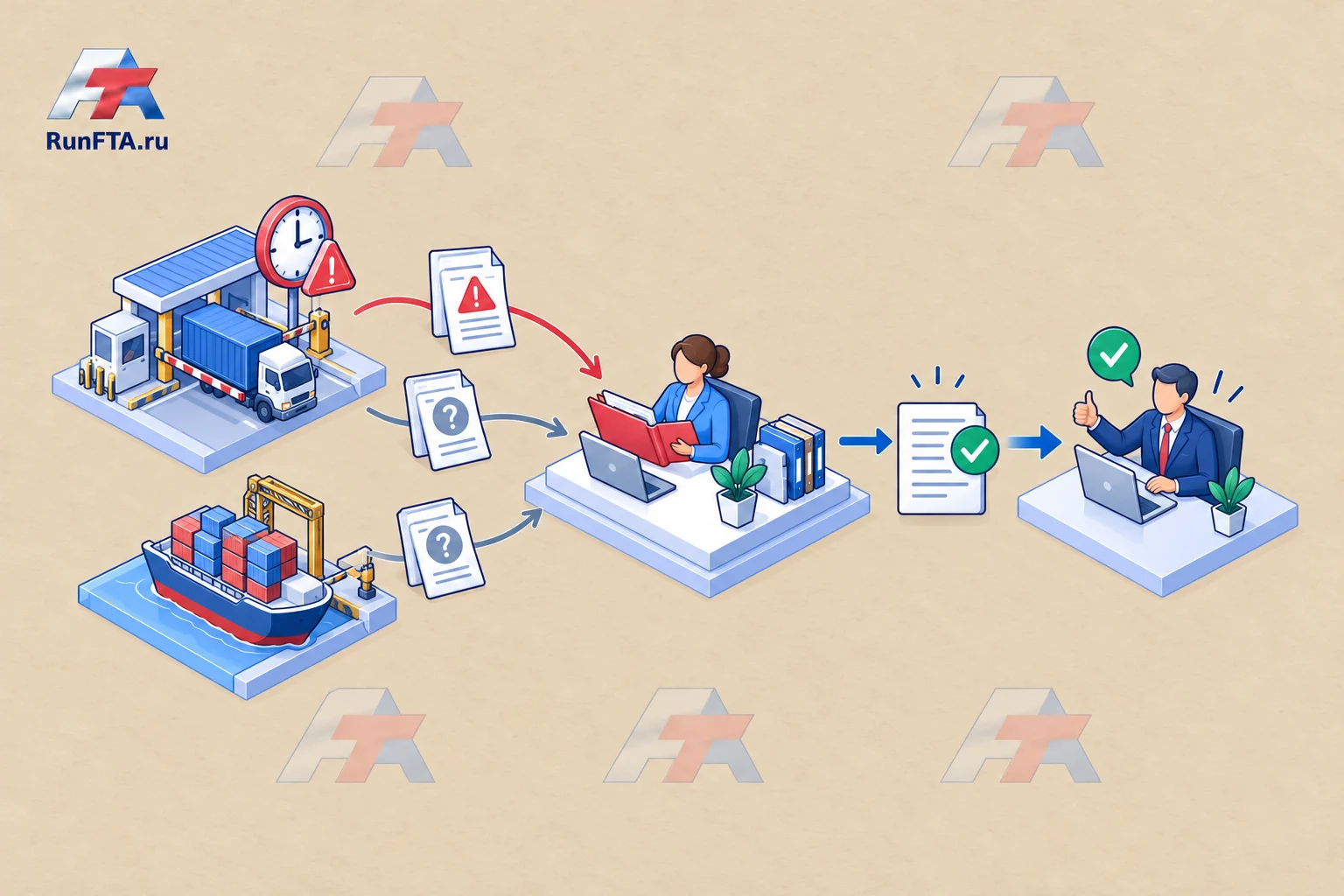
Agree on the next message in advance
Before departure, determine who will update the log, what confirmations to retain, and when to report a lack of information.
For deviations, assign a specific action: clarification with the carrier, document verification, or plan revision.
Link the log to the export deal card.
The manager needs open issues and the next control point, not continuous correspondence about the cargo being en route.
A practical management guide.
All examples are illustrative.
Check applicable requirements and terms for the specific product, country and contract.
Sources checked on 24 October 2026.