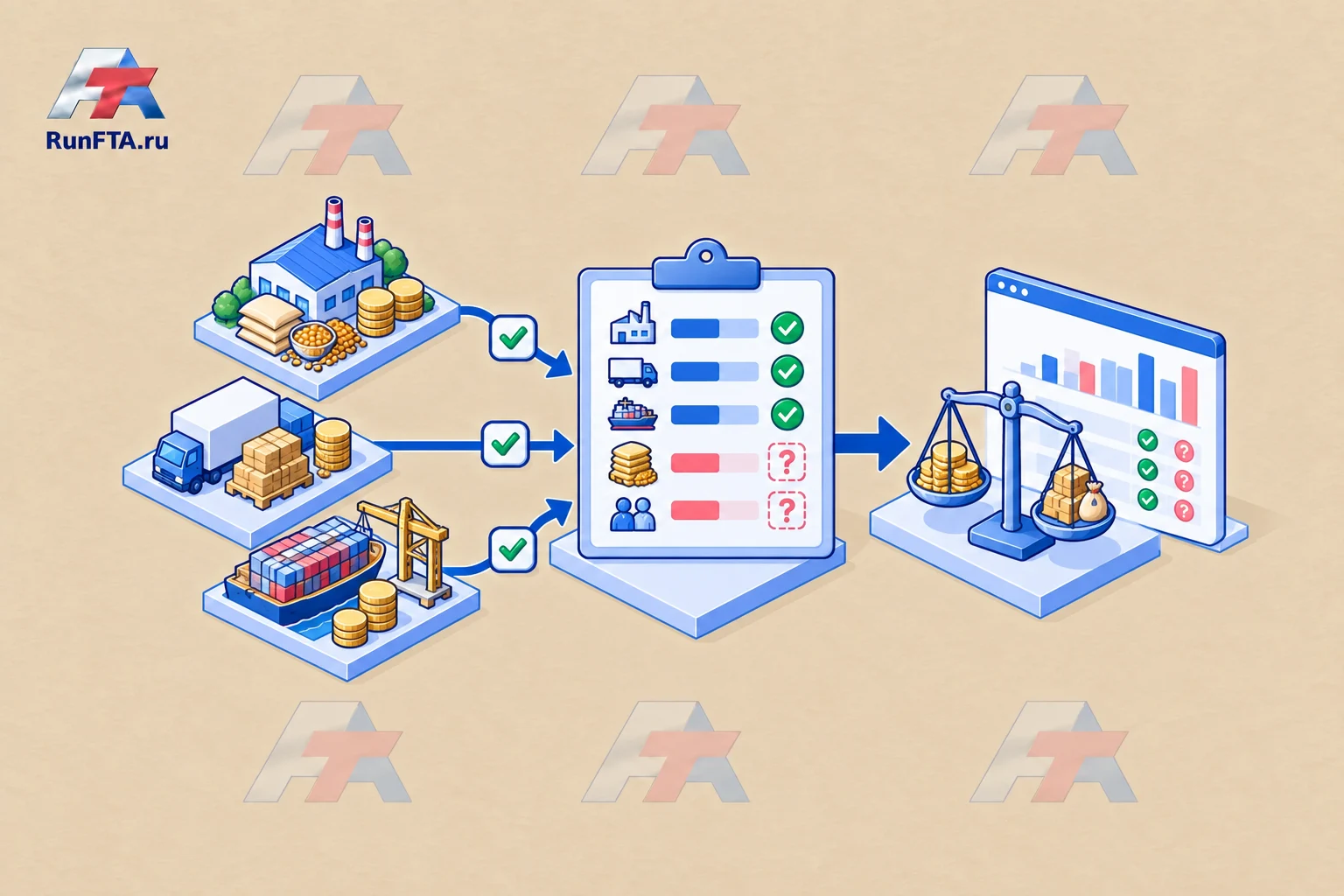
The delivery format is chosen together with the recipient
A low packaging price does not mean low costs for the entire shipment.
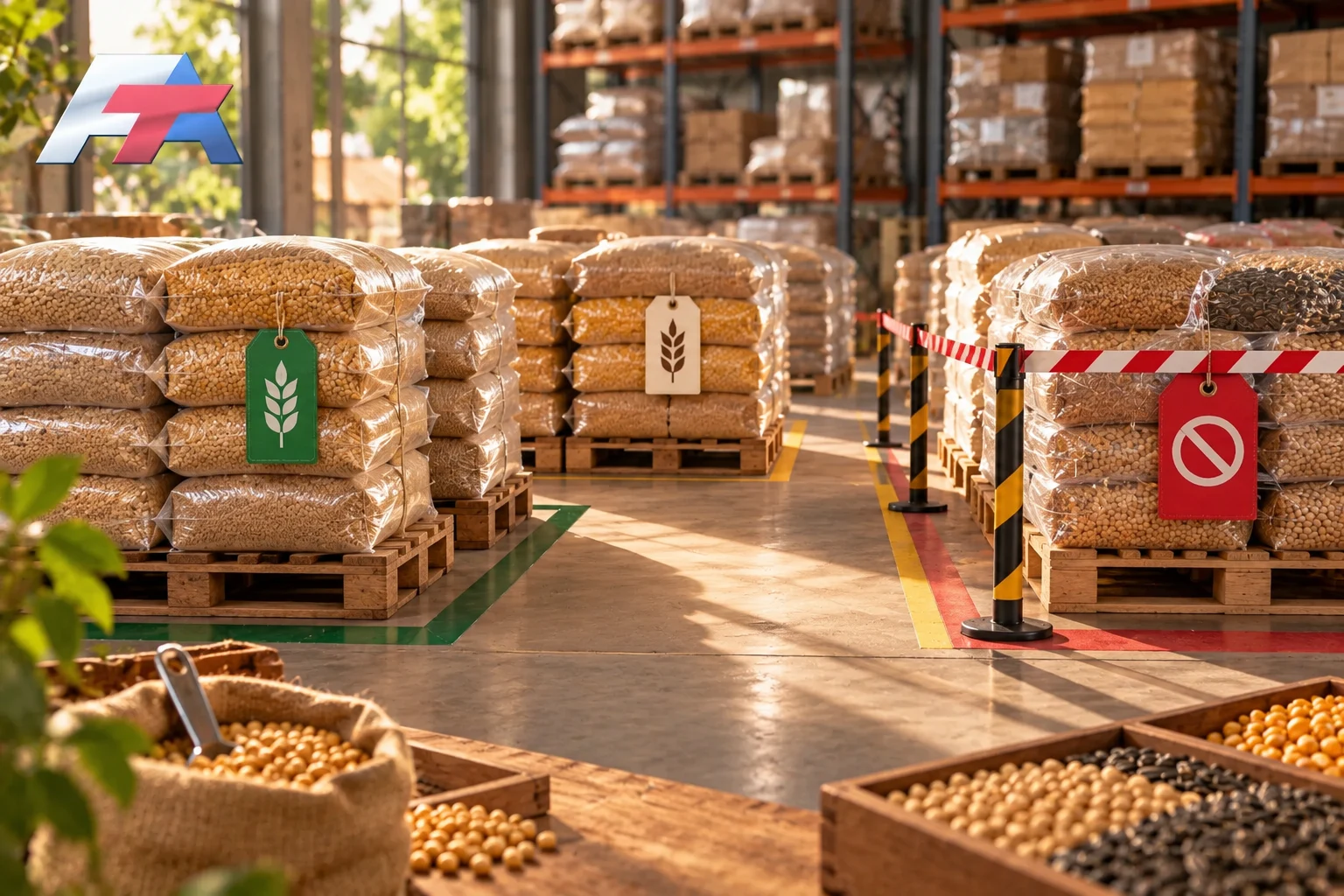
Bulk grain, grain in bags and in big bags require different operations during loading and acceptance.
If the buyer cannot accept the chosen format, the savings on packaging turn into a separate reloading task.
You need to compare the same product, volume and destination.
First, confirm technological compatibility, then calculate the costs.
The article helps to organise such a comparison but does not select equipment or permissible loads instead of specialists.
Let’s discuss the choice of grain delivery format in your company
I’ll help you analyse the choice of grain delivery format, collect initial data and confirmations, identify participants and next steps.
We’ll also discuss similar challenges and related foreign trade tasks in your company.
The scope of support will be agreed before work begins.
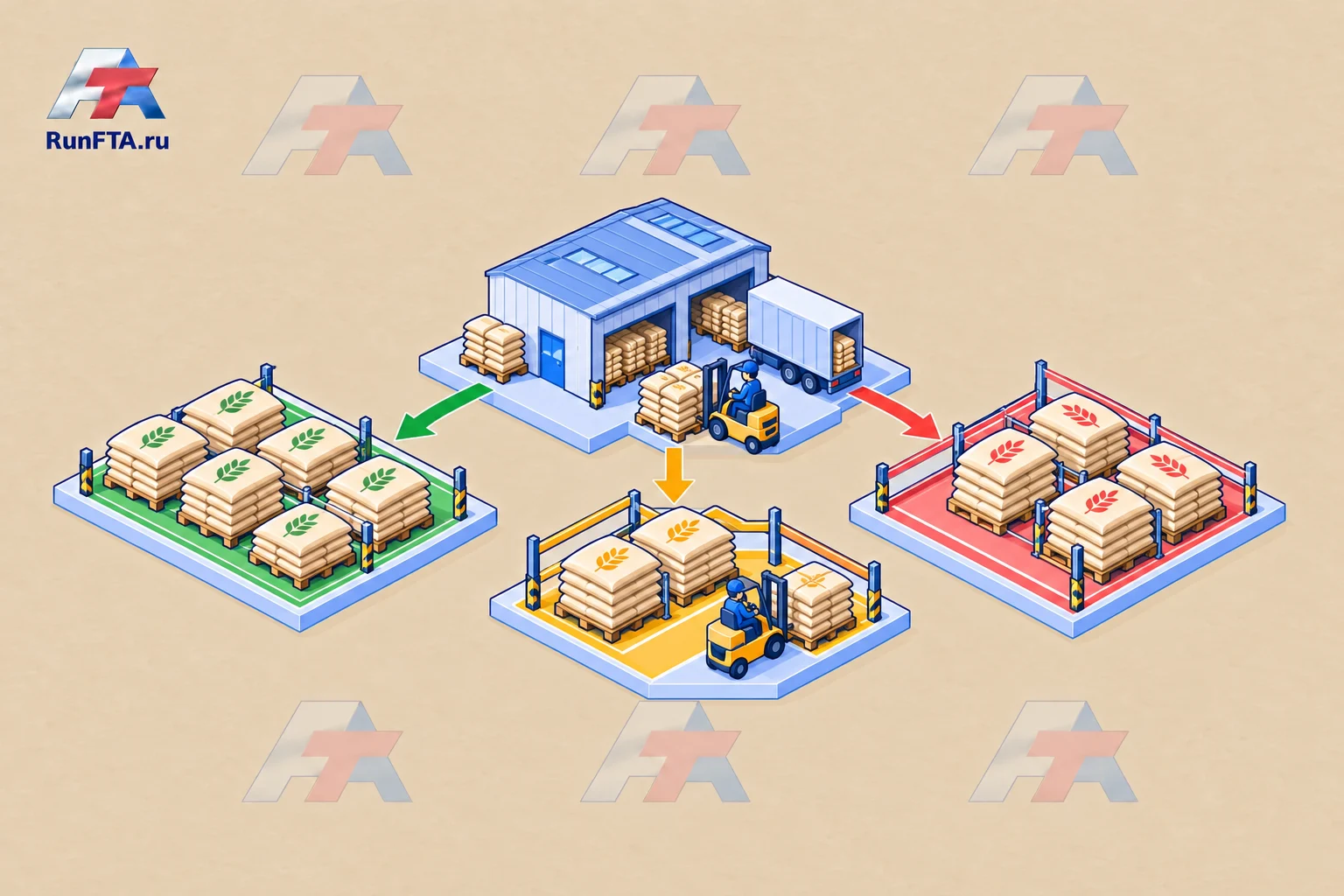
Draw the cargo route to the receiving equipment
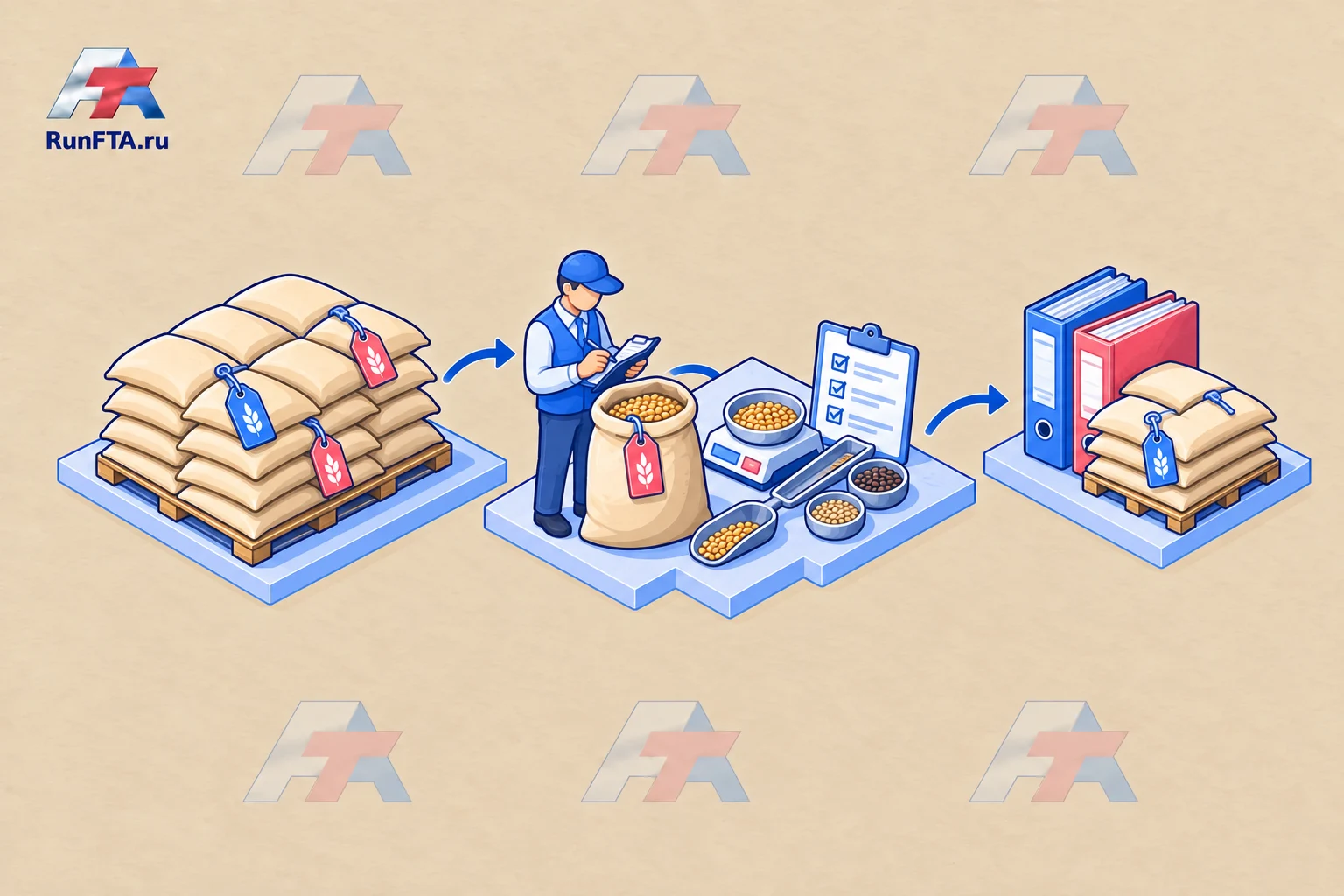
For each option, write down the operations: preparation, packaging, storage, loading, possible reloading and unloading.
Clarify where the packaging is opened, who accepts the residues and how the batch identification is maintained.
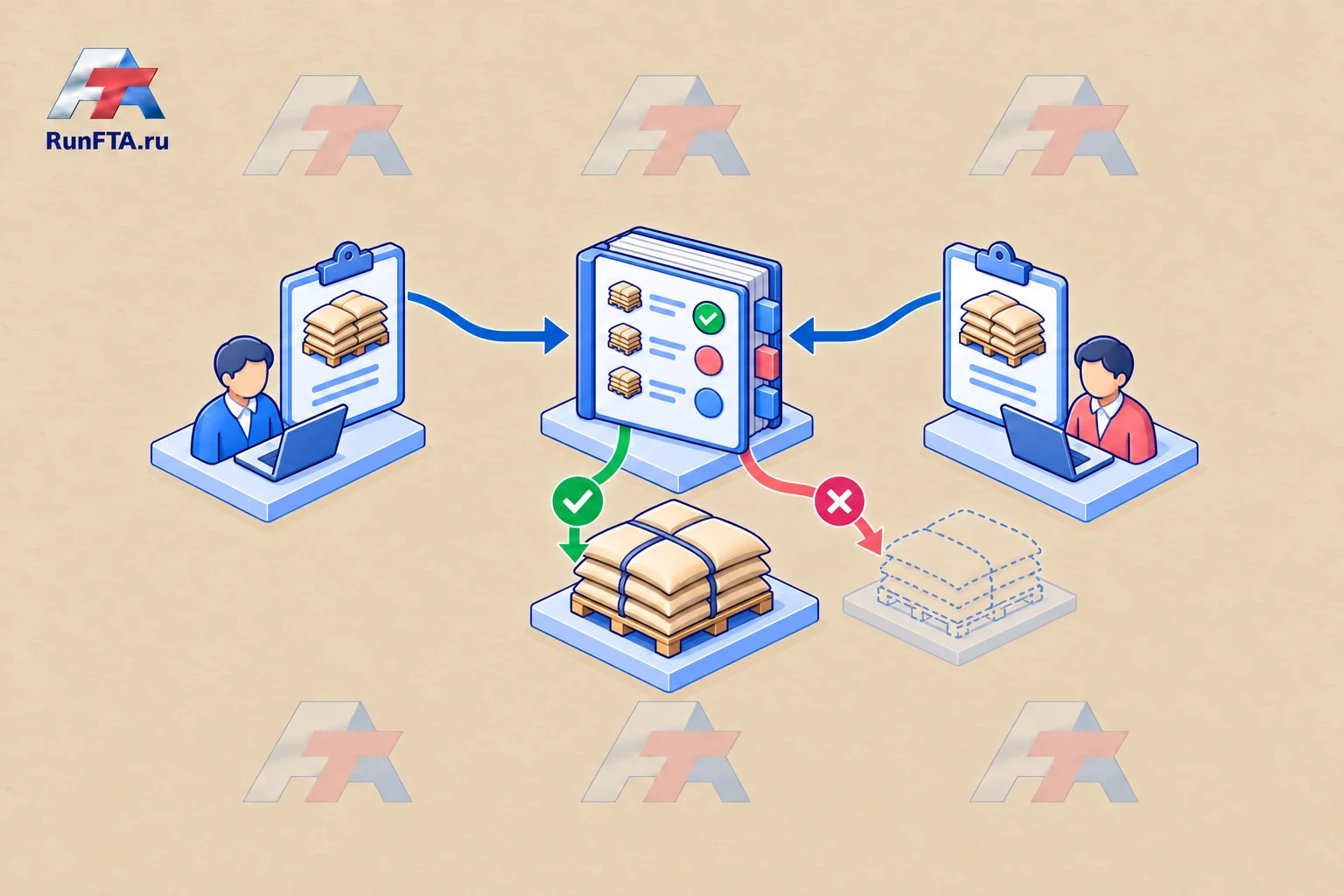
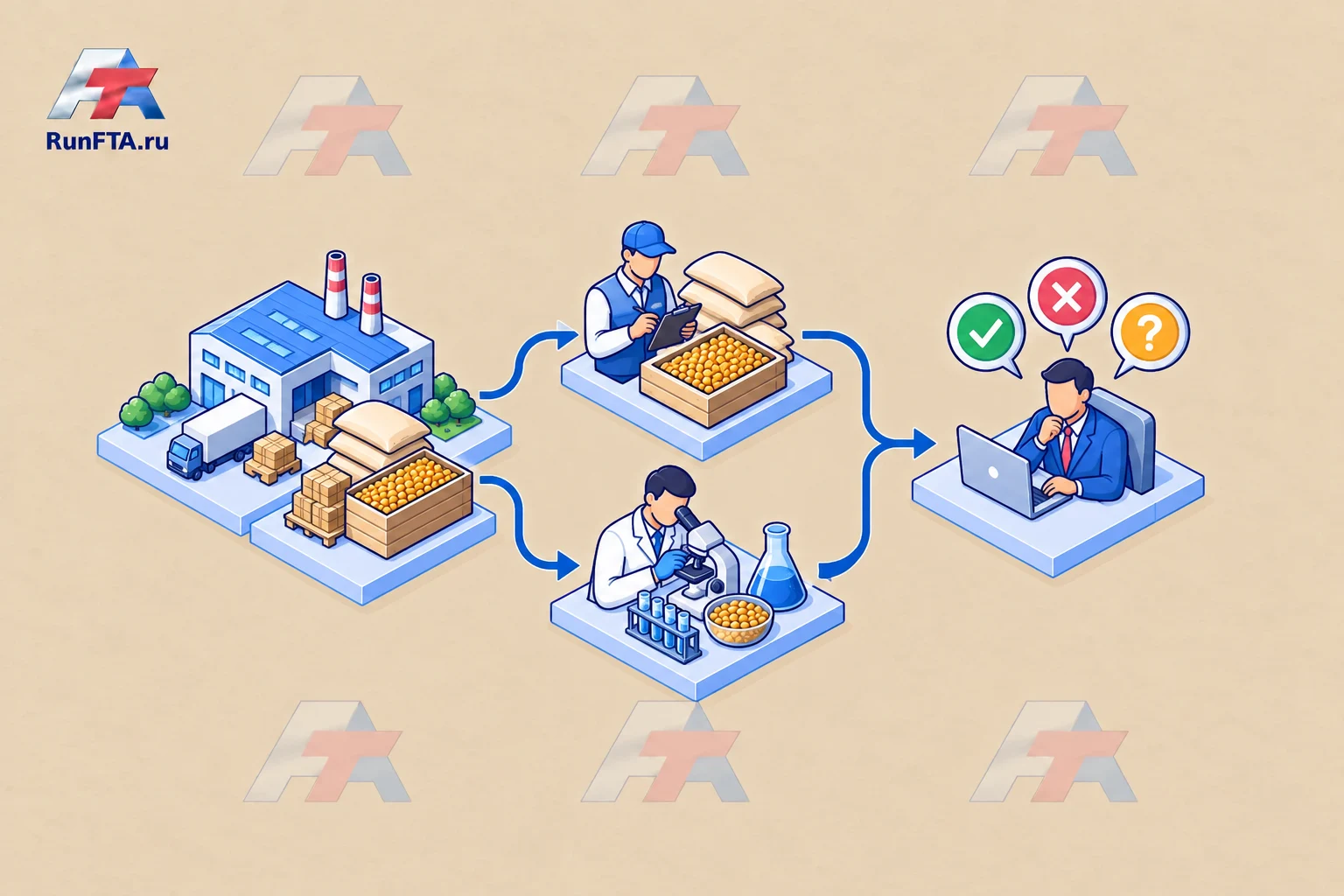
The recipient confirms the available equipment and site limitations.
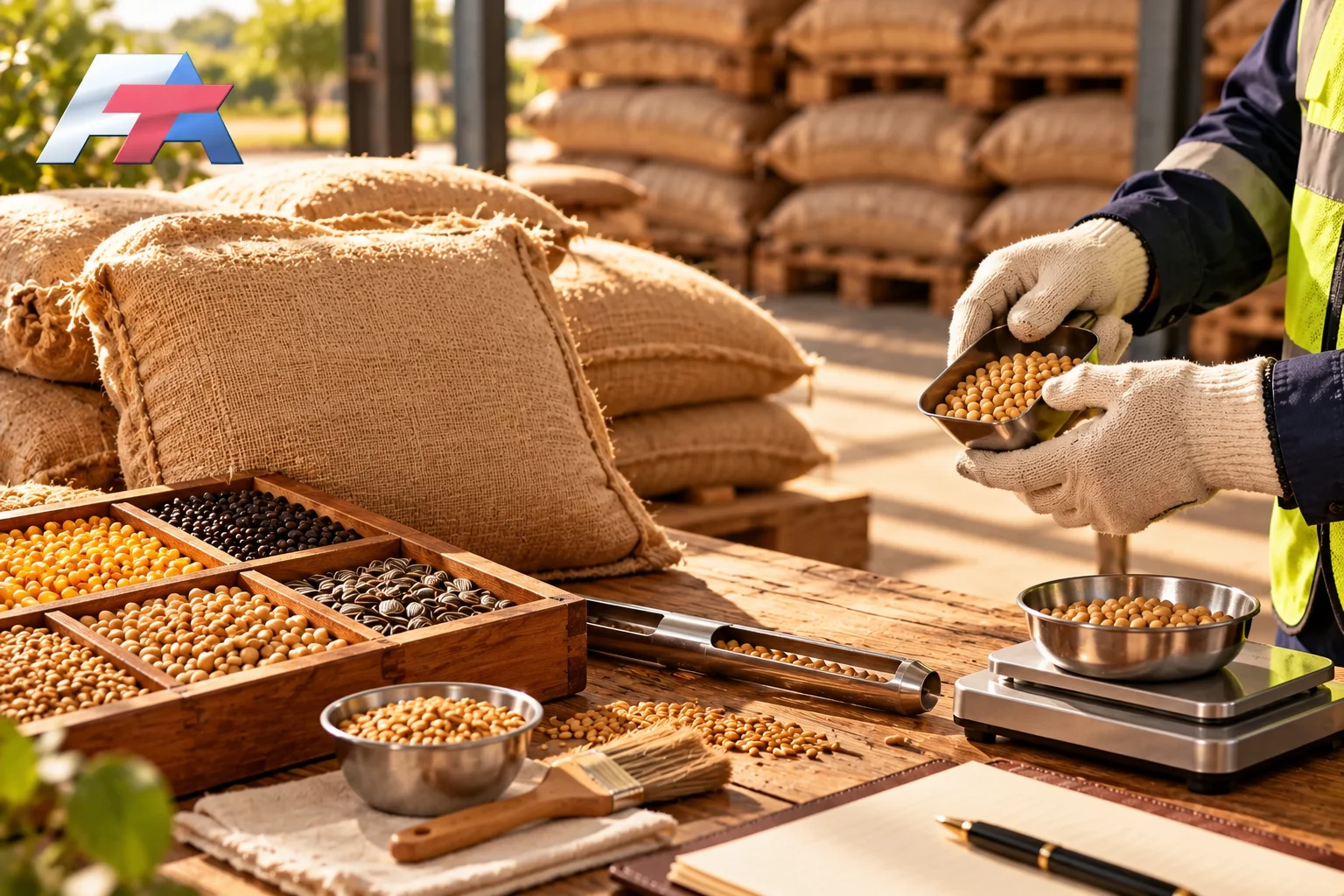
The sender and operator check the suitability of the packaging and handling method for the specific product.
A big bag cannot be considered compatible with any lifting device just based on its capacity.
Technical parameters, fastening and work safety are determined by competent participants.
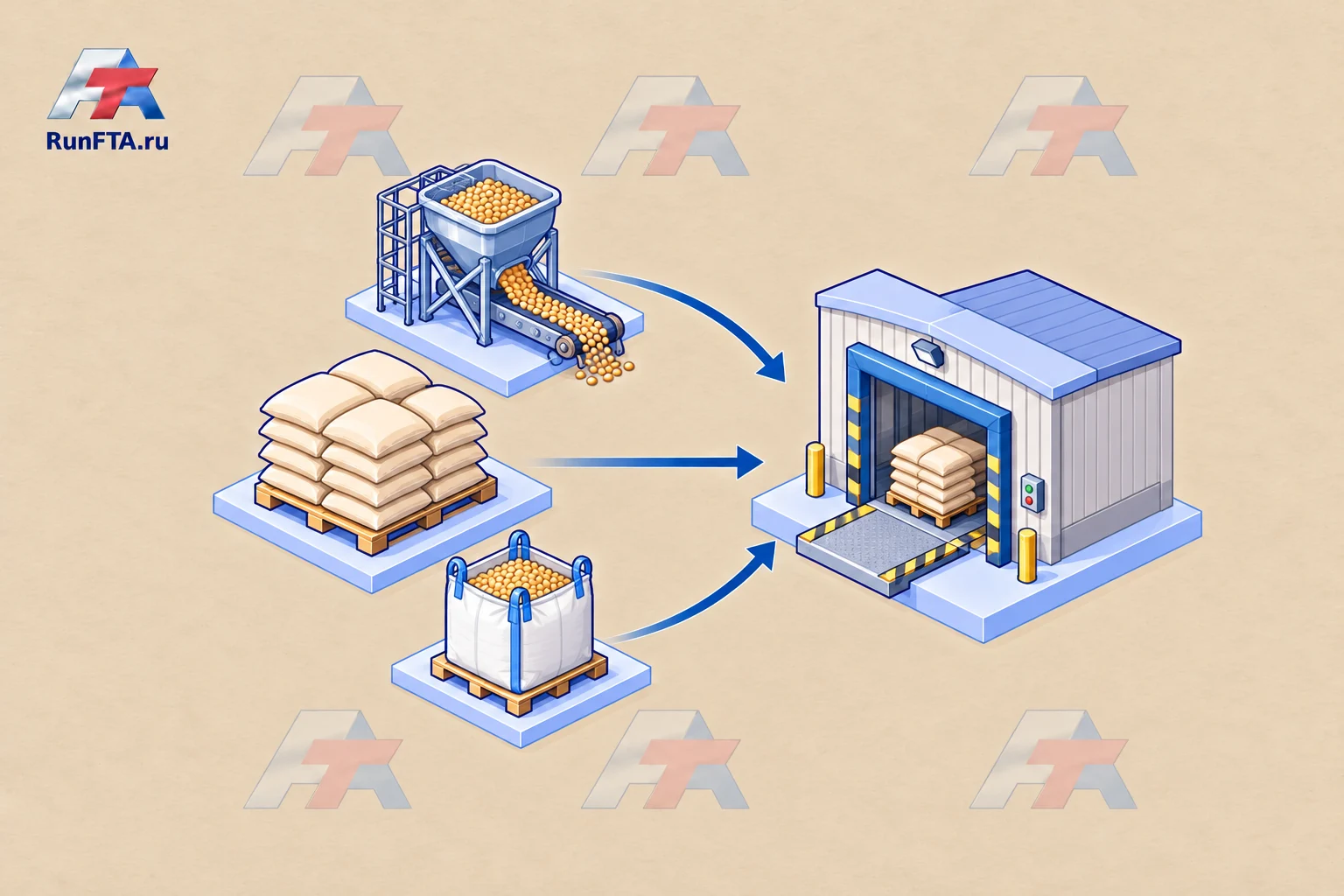
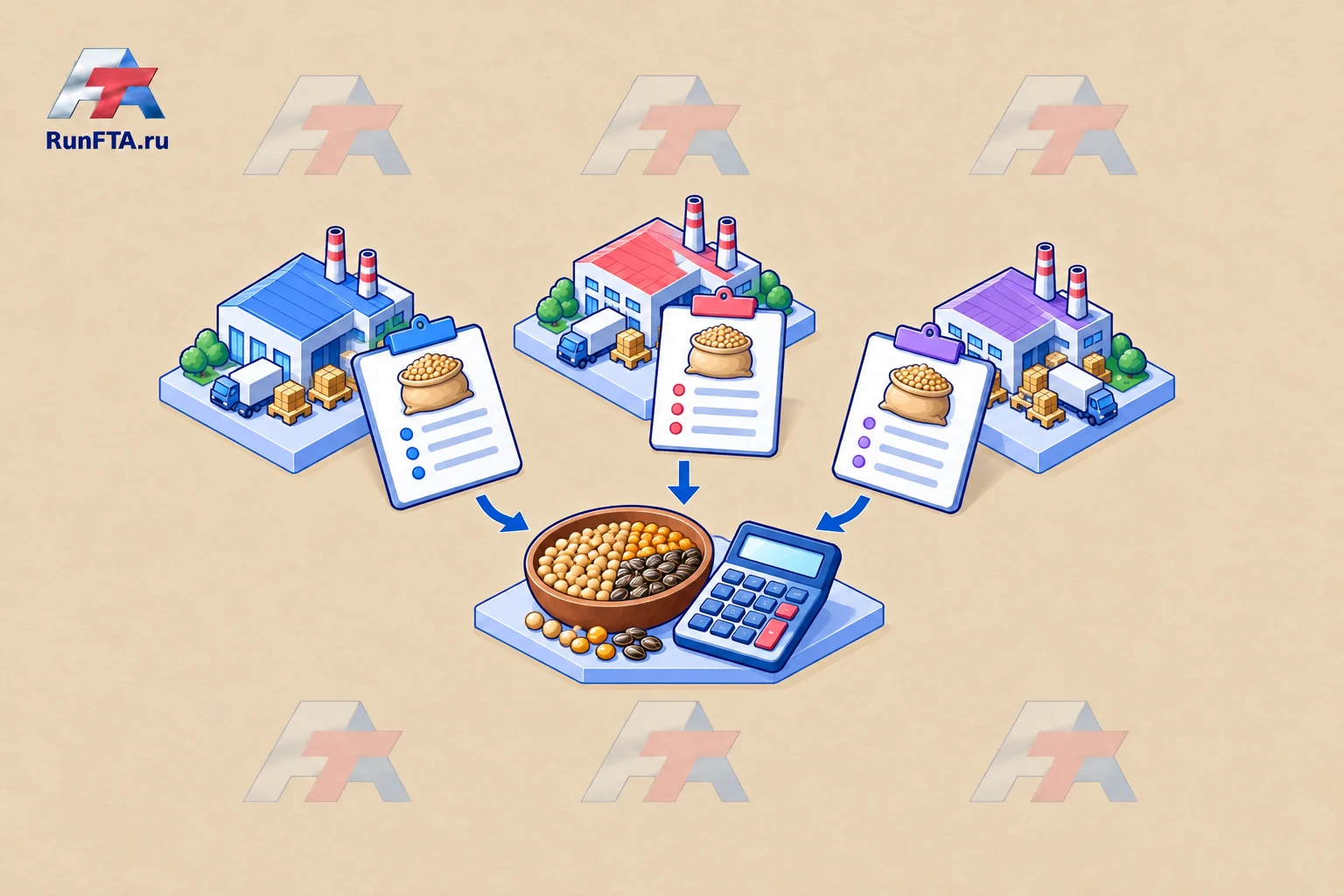
Compare the same cost boundary
The table is an internal request form, not a carrier’s tariff.
| Item | Bulk | Bags | Big Bags |
|---|---|---|---|
| Preparation and packaging | Request calculation | Request calculation | Request calculation |
| Operations along the route | Specify each | Specify each | Specify each |
| Buyer’s acceptance | Confirm | Confirm | Confirm |
| Handling of packaging and residues | Clarify | Clarify | Clarify |
Do not compare the rate to the terminal with the option to the buyer’s warehouse.
Mark an unconfirmed operation as an open question, not as zero cost.
Check the bottleneck with a trial configuration
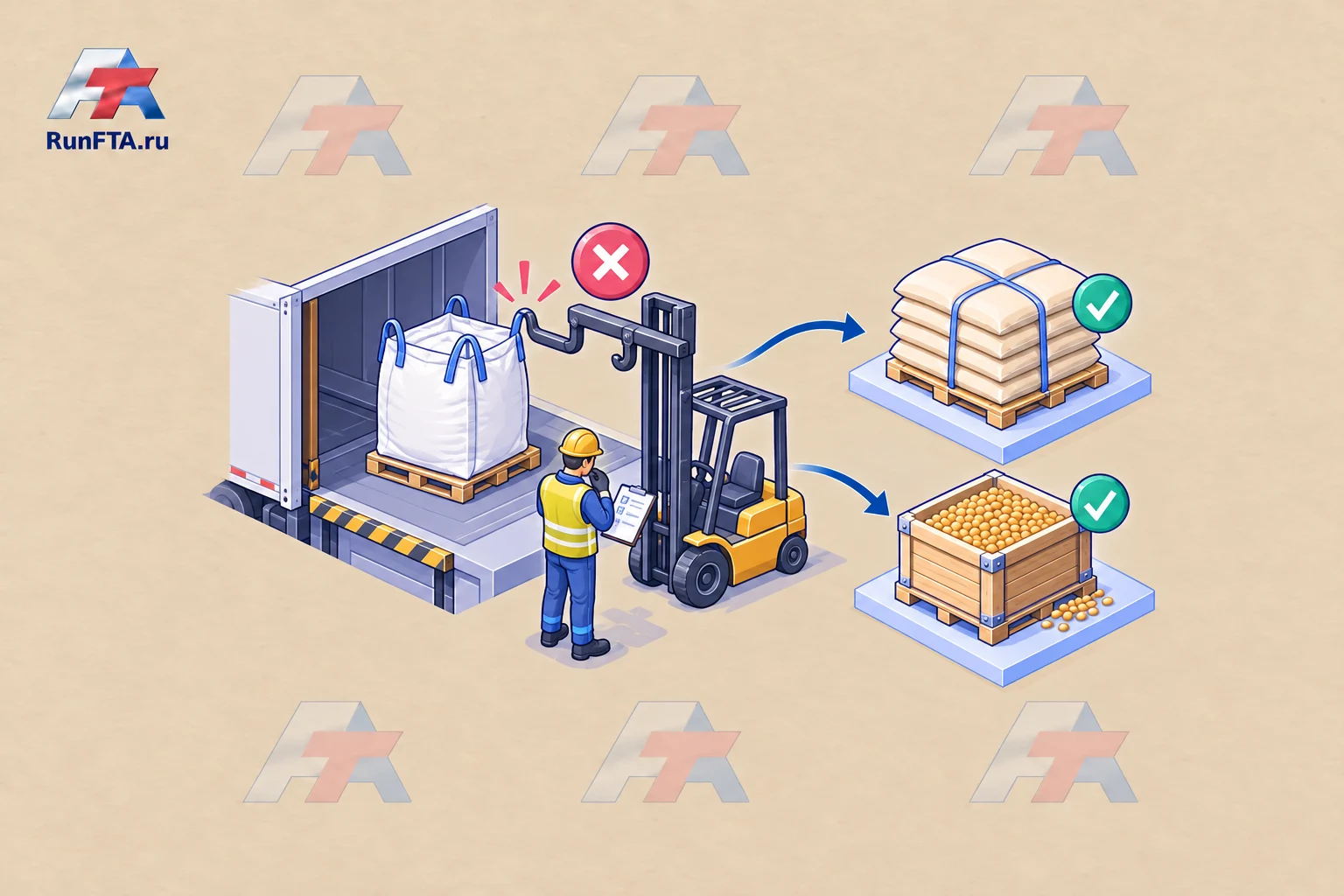
An illustrative scenario: the supplier proposed big bags, but the buyer’s warehouse confirmed only handling bags on pallets.
Before ordering, the team clarifies the acceptance possibility or changes the format and recalculates the operations.
Unauthorized packaging changes upon arrival are not part of the initial savings.
If a different product or a new site is planned, the old agreement does not automatically carry over.
Keep the parameters of the actually approved option and the owner of the confirmation.
Fix the chosen configuration
In the decision, specify the format, route, price boundary and conditions under which a new calculation is needed.
The manager should see technical confirmation and commercial comparison separately.
The cheapest line without confirmed acceptance is not a ready option.
Include total costs in the export batch margin calculation.
When using pallets, separately agree on the layout and handling of the cargo unit: this is the next level of verification, not a default bag property.
A practical management guide.
Examples are illustrative.
Check requirements and contractual terms for the specific product, country and shipment.
Internal forms do not replace official procedures.
Sources checked on 25 October 2026.