
Establish the payment’s actual status
“We sent the money” may mean an instruction was created, the buyer's account was debited or a transfer completed. Ask for confirmation from the sending bank: date, amount, currency, beneficiary and available transaction identifier. Compare it with the contract and account details.
Assign one person to gather information from both sides. Otherwise the buyer speaks to sales, the bank speaks to accounting and management receives an outdated version. Record the time and issuer of each confirmation. Do not mark an obligation paid solely on a screenshot of an instruction.
Let’s discuss coordination when export payment is delayed
I can help review your situation, identify documentation and coordination tasks, and agree participants and next steps. We can also discuss related trade issues and similar difficulties across your company’s shipments. Tell me where the process is getting stuck so we can agree a specific task and scope of support.
Discuss your taskSeparate the possible states
| Observed state | Team action |
|---|---|
| No dispatch confirmation | Ask the buyer about the reason and contractual due date |
| Debited but not credited | Ask the banks to investigate through their procedures |
| Documents requested | Record the exact list, recipient and response deadline |
| Transfer returned | Obtain the documented reason and reconcile details |
| Funds credited | Check amount, currency, fees and the obligation covered |
This is an organisational workflow, not a bank procedure. Identifiers and tracing methods depend on the payment system. One confirmation format will not suit every transfer.
Assemble a consistent evidence package
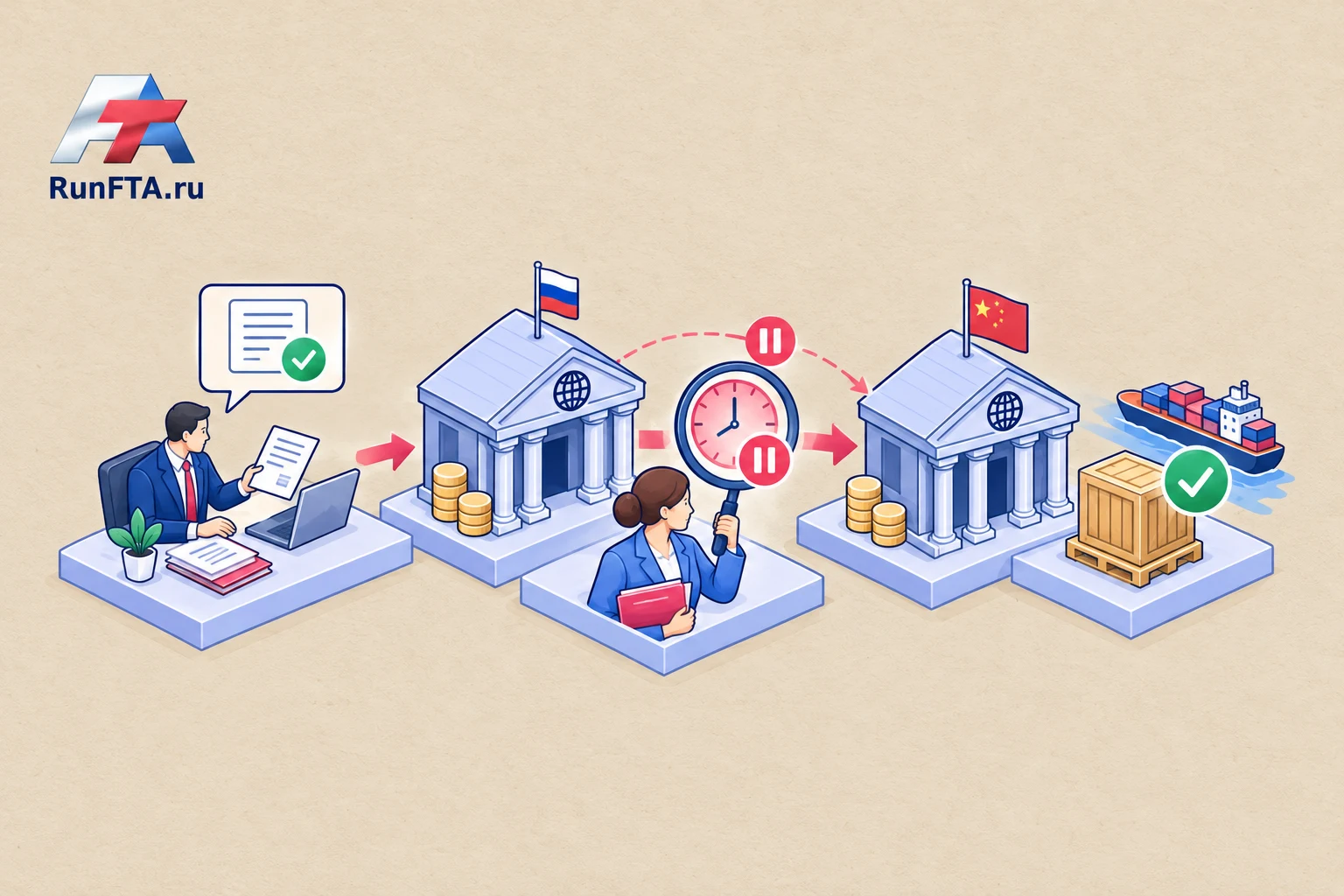
Respond to the bank's actual request with documents explaining the transaction and its contractual basis. Depending on that request, this may involve the contract, specification, invoice and performance evidence. Reconcile party names, amounts, payment purpose, product and shipment stage. Do not circulate conflicting versions without identifying the change.
The ICC, BAFT and Wolfsberg trade-finance principles discuss participant and transaction checks; they do not grant automatic payment approval. Likewise, a Bank of Russia publication on currency-control changes does not establish that a particular overseas bank will accept the proposed route.
Avoid creating a second uncertainty
Before changing payer, beneficiary, currency or bank, discuss the required contractual and documentary changes with the banks and legal advisers. An intermediary's verbal promise is not confirmation. Payment descriptions must continue to reflect the real transaction.
Coordinate any repeat payment with the status of the original to avoid duplicate performance or further reconciliation. Do not promise a credit date the bank has not confirmed. Keep planned actions separate from completed results.
Recalculate the business impact
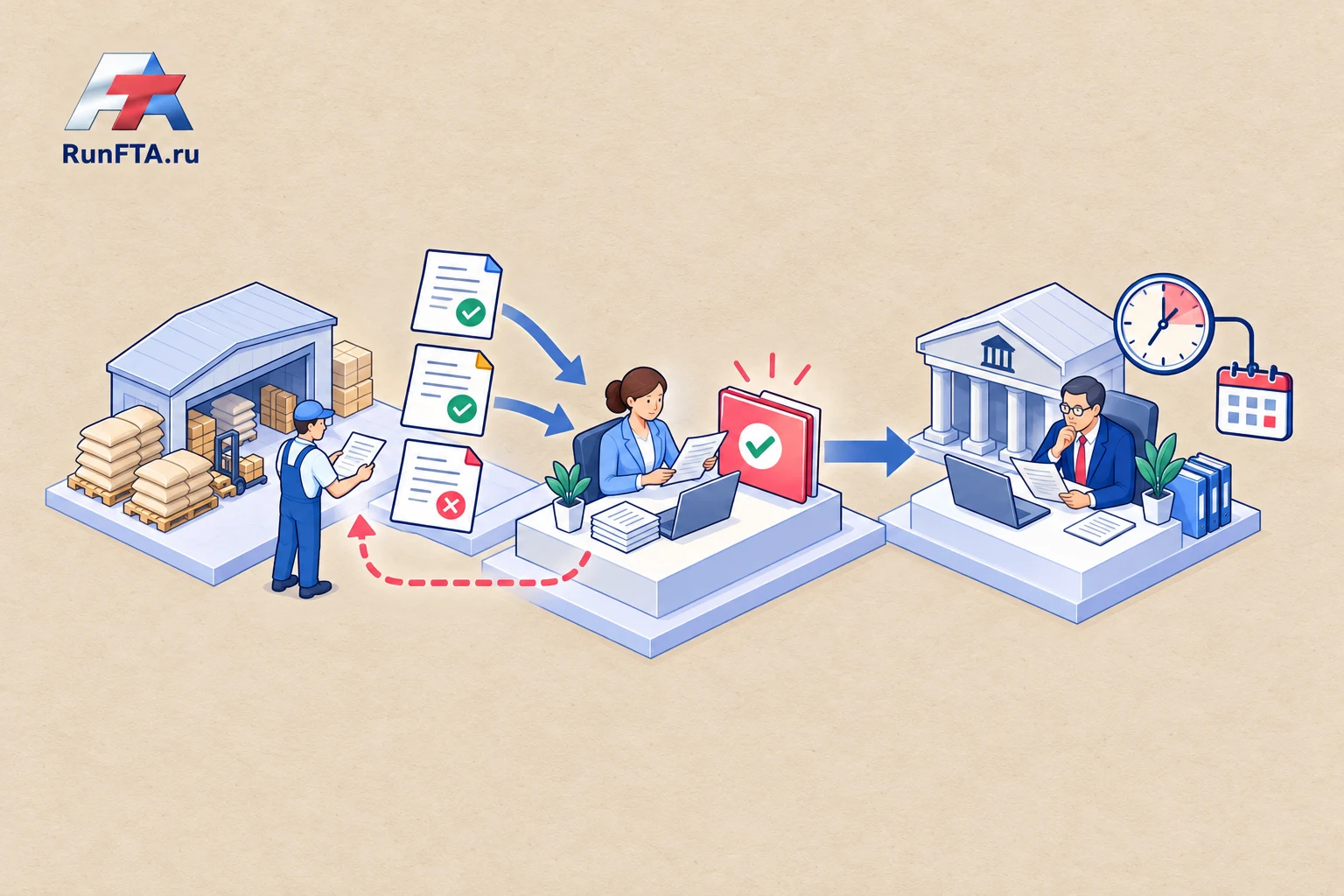
Finance updates the cash calendar, management reviews the next purchase and dispatch, and the contract owner checks obligations. Suspending shipment, withholding documents or revising dates requires review of the agreement and applicable law; none follows automatically from every delay.
Close the incident only after confirmed credit or another agreed outcome. Retain the reason, evidence, decisions and actual duration. For the next deal, clarify bank requirements and buyer information in advance. Run FTA can coordinate statuses and documents, but cannot guarantee bank approval or transfer speed.
Management guidance for exporters. Numerical examples are illustrative; requirements and terms must be checked for the specific product and transaction. Sources checked on 24 October 2026.