
Separate Roles and Procurement Decisions
A foreign buyer can instruct a representative in Russia to collect offers from manufacturers, coordinate visits, and relay questions about a shipment.
Meanwhile, a seller might offer the representative a commission for the deal.
If the buyer is unaware of this, it becomes difficult for them to assess why a particular supplier is recommended.
Before starting the search, document who pays the representative, for what work, and who makes the decision on product selection.
A potential commission should be openly agreed upon—it is not an automatic indication of a violation or a guarantee of impartiality.
The buyer defines the product requirements and makes the purchase decision.
The representative can gather information, ask questions, and facilitate communication within the agreed boundaries.
Signing contracts, managing funds, receiving samples, and accessing data are separate authorities; do not assume these automatically follow from the search mandate.
The International Trade Administration (https://www.trade.gov/negotiating-agreement-foreign-representative) recommends describing the representative’s duties, authorities, and remuneration.
This is a general guideline from the U.S. agency; the Russian contract and applicable law must be reviewed separately.
Do you need a buyer’s representative in Russia?
I will help you agree on tasks, collect offers from manufacturers, and prepare questions to address your company’s needs.
We will discuss the work format and remuneration before starting the collaboration.
Discuss Remuneration in Advance
Ask each party to confirm in writing:
- Who pays for the representative’s fixed work and what actions are included.
- Whether a commission is provided by the buyer, supplier, or both; who receives information about it and when.
- What base is used to calculate the percentage, in which currency, and at what event it becomes due.
- How partial deliveries, returns, price changes, or deal cancellations are accounted for.
- Who approves third-party expenses and to whom the representative provides related documents.
In a specific deal, a lawyer and accountant will evaluate the contract structure, restrictions, taxes, and payment terms.
Do not apply a sample scheme universally across countries and products.

Owner’s Checklist
| Question | What to Document Before Assigning the Task |
|---|---|
| Interests | Whose interests the coordinator represents for this task |
| Authorities | What information they gather and what decisions the buyer makes |
| Money | Source of fixed remuneration and potential commission |
| Disclosure | Who receives information about remuneration and when |
| Comparison | Criteria for evaluating offers and reasons for rejections |
| Verification | Who reviews the contract, restrictions, and payment procedures |
If the representative receives or may receive remuneration from another party, the buyer may discuss how to reflect this in reports and agreements.
The ICC guidelines (https://iccwbo.org/wp-content/uploads/sites/3/2018/08/icc-conflicts-of-interest-guidelines-july-2018.pdf) treat disclosure and conflict management as elements of a company’s internal rules.
The document’s applicability to your deal must be verified separately.
Hypothetical Example
The buyer has agreed on a fixed payment of 1,000 units for organizational work.
Separately, the parties discuss a 1% commission on the value of the paid shipment of 50,000 units, which amounts to 500 units.
If the model chosen and verified by the parties includes both payments, the total will be 1,500 units.
This example does not establish a market rate or imply that the terms are acceptable for a specific deal.
Before agreeing, determine who pays the commission, whether it applies to partial payments, and how documents are formalized.
How to Evaluate a Supplier’s Offer
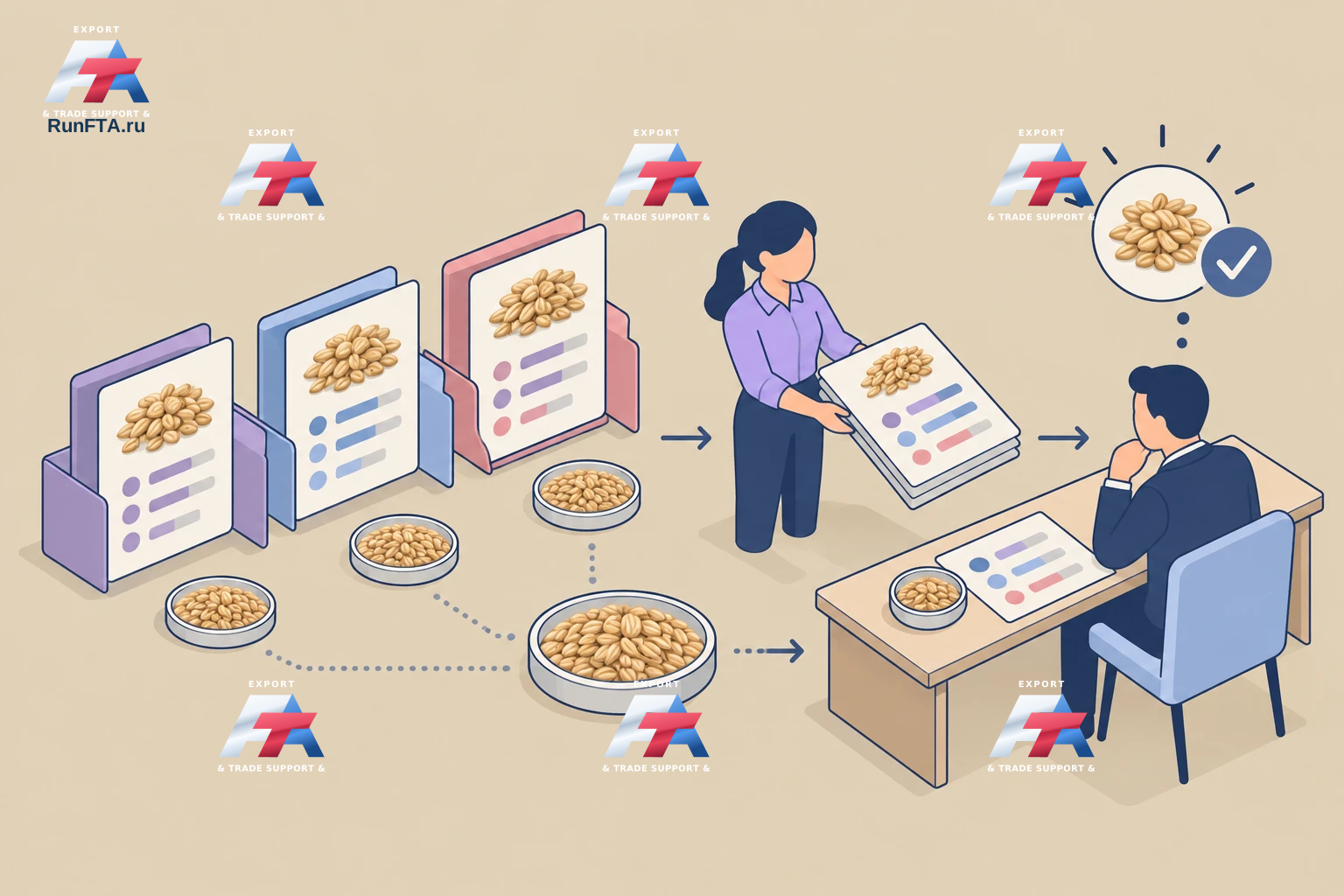
Compare offers using identical parameters: product and specifications, volume, delivery location, price and currency, validity period, documents, and confirmed restrictions.
Do not evaluate a supplier solely based on commission size or price without considering the service package.
After discussion, document the agreed terms and outstanding questions.
Data verification and site visits should be organized as separate tasks; they do not replace the buyer’s decision or guarantee the supplier’s reliability.
For more details, see: Related article
Do you need a representative to search for products and coordinate with suppliers in Russia?
I will help you agree on tasks, collect offers, and prepare questions to address your company’s needs.
We will discuss the work format and remuneration before starting the collaboration.
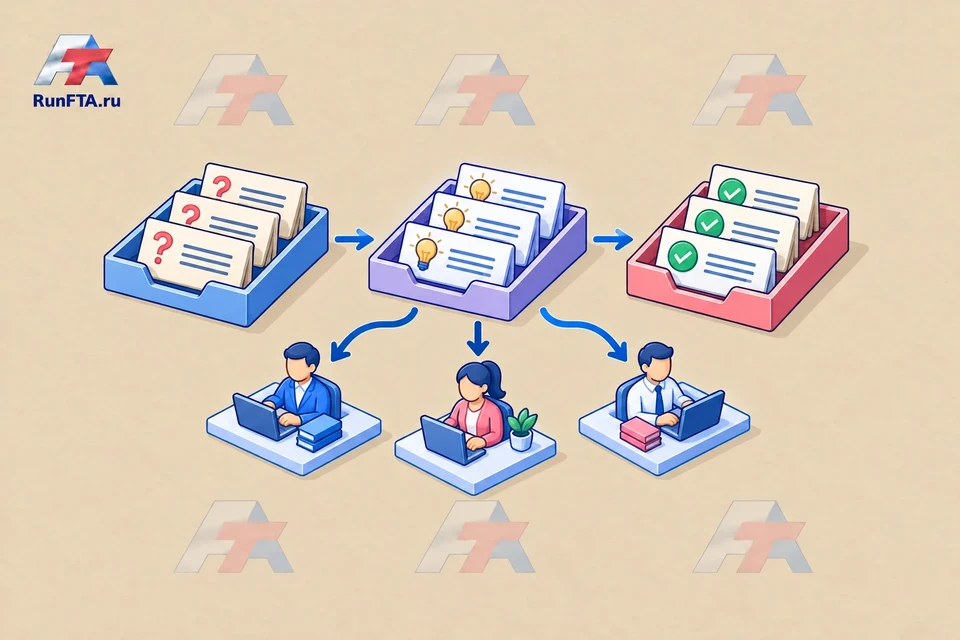
Suggested management workflow.
Examples are hypothetical.
Authority, contractual terms and mandatory procedures must be checked for the specific transaction; overseas guidance does not establish Russian legal requirements.
Reviewed 27 October 2026.